

The UAE has achieved a fourth-place global ranking for nuclear facility protection in the 2026 Nuclear Security Index, published by the Nuclear Threat Initiative (NTI). The assessment covers measures designed to protect nuclear facilities from sabotage, including physical protection, cybersecurity, insider-threat prevention and response capabilities. The result is relevant to the UAE’s nuclear energy sector, regulators and international partners as the country continues operating its Barakah Nuclear Energy Plant.
- Location: United Arab Emirates
- Assessment: 2026 Nuclear Security Index
- Organisation: Nuclear Threat Initiative (NTI), in partnership with Economist Enterprise
- Global ranking: Fourth among 48 countries for protection against nuclear facility sabotage
- UAE score: 86 in 2026, up from 66 in 2023
- Key facility: Barakah Nuclear Energy Plant, Abu Dhabi
- Who is affected: Nuclear operators, regulators, security bodies and international partners
- What’s next: Continued improvements in nuclear security, cybersecurity and international cooperation
Why did the UAE rank fourth for nuclear facility security?
The UAE ranked fourth among 48 countries for measures protecting nuclear facilities against sabotage in the 2026 Nuclear Security Index.
The NTI assessment found that the UAE’s score for security and control measures increased from 66 in 2023 to 86 in 2026, marking a 20-point rise.
The category examines several parts of nuclear security, including physical protection of facilities, measures against insider threats, response capabilities, cybersecurity and security culture.
The ranking therefore relates specifically to the UAE’s assessed security and control measures. It should not be read as an overall score of 86 for every aspect of nuclear security in the country.
What helped improve the UAE’s nuclear security score?
According to the NTI, several developments contributed to the UAE’s progress between the two assessments.
These include strengthened requirements for protecting nuclear facilities, updated cybersecurity provisions, improved personnel vetting and measures designed to strengthen preparedness and resilience.
These safeguards are particularly important for nuclear facilities because security arrangements have to address both physical and digital threats.
The UAE’s regulatory system also requires coordination between nuclear operators, regulators and other relevant national bodies.
The Federal Authority for Nuclear Regulation (FANR) is responsible for regulating nuclear facilities and nuclear and radioactive materials in the UAE. It conducts inspections and oversees compliance with nuclear security requirements.
How does FANR oversee nuclear security in the UAE?
FANR plays a central role in monitoring nuclear security requirements across the UAE’s nuclear sector.
The regulator’s work includes inspections of nuclear facilities and activities involving radioactive materials. FANR’s 2024 reporting recorded seven nuclear security inspections at the Barakah Nuclear Energy Plant, alongside inspections involving facilities using radioactive materials and related transport activities.
In 2024, FANR also approved an updated regulation covering physical protection and cybersecurity. The requirements address nuclear facilities, nuclear material in transport and certain advanced nuclear technologies.
This regulatory work provides an additional layer of oversight around the UAE’s nuclear infrastructure.
The UAE also works with the International Atomic Energy Agency (IAEA) and other international partners on nuclear security expertise, national capabilities and wider international efforts.
What is the UAE’s position in global nuclear security efforts?
The 2026 NTI assessment also placed the UAE in other parts of its global nuclear security assessment.
The UAE ranked joint 15th among 154 countries and areas for its contribution to global efforts to prevent the theft of nuclear materials. It received a score of 85 out of 100, which was two points higher than the recalculated 2023 baseline.
The NTI also identified the UAE among 12 countries it described as emerging driving forces for progress in global nuclear security.
According to the NTI, this recognition relates to countries that have made sustained improvements domestically while supporting other governments and increasing engagement with international institutions.
The assessment considers more than facility-level protection. Its wider framework includes domestic commitments and capabilities, international norms and the broader risk environment.
How does the ranking relate to the Barakah Nuclear Energy Plant?
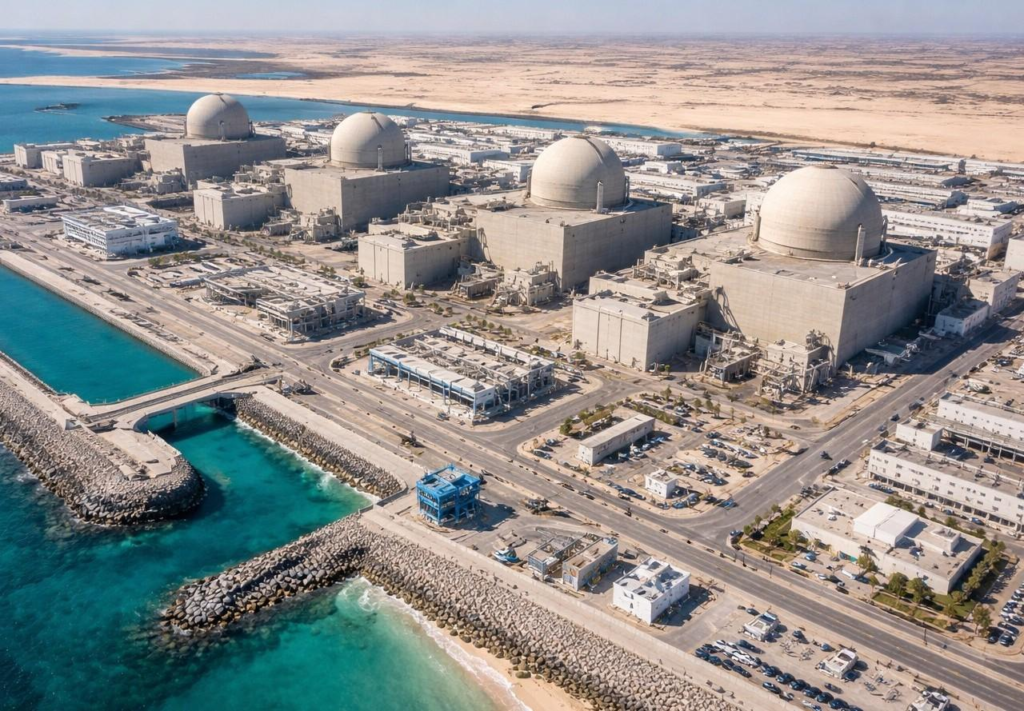
The UAE’s nuclear security framework is particularly relevant to the Barakah Nuclear Energy Plant in Abu Dhabi, the first nuclear power plant in the Arab world.
The plant has four reactors and is operated by the Emirates Nuclear Energy Company (ENEC), while FANR provides independent regulatory oversight.
Barakah has become part of the UAE’s electricity-generation infrastructure, making security and regulatory oversight important to the wider energy sector.
As nuclear facilities increasingly rely on digital systems, cybersecurity has also become an important part of protecting critical infrastructure. The UAE’s updated physical protection and cybersecurity requirements reflect this broader security environment.
The NTI assessment’s recognition of improved cybersecurity provisions is therefore relevant to both the UAE’s existing nuclear operations and the country’s longer-term approach to nuclear security.
The UAE’s ranking provides a snapshot of how its nuclear security and control measures compare with those assessed in other countries.
For residents, the issue is connected to the safe and secure operation of the country’s nuclear energy infrastructure. For businesses and international partners, nuclear security is part of the regulatory environment surrounding the UAE’s energy sector.
The 2026 assessment also shows that nuclear security is not limited to physical barriers around a facility. It includes:
- Physical protection and access controls
- Cybersecurity measures
- Personnel vetting
- Protection against insider threats
- Emergency and response capabilities
- Regulatory inspections
- National and international coordination
FANR Director-General Hamad Al Kaabi said the UAE would continue strengthening its capabilities, learning from international experience and working with national and international partners as the nuclear security environment evolves.
FAQs
What is the UAE’s nuclear security ranking in 2026?
The UAE ranked fourth among 48 countries in the 2026 Nuclear Security Index for measures protecting nuclear facilities against sabotage.
What is the UAE’s nuclear security score?
The UAE scored 86 for security and control measures in 2026, compared with 66 in the 2023 assessment.
Which organisation published the Nuclear Security Index?
The Nuclear Threat Initiative (NTI) developed the Nuclear Security Index in partnership with Economist Enterprise. The index assesses nuclear security conditions across countries and territories.
Who regulates nuclear facilities in the UAE?
The Federal Authority for Nuclear Regulation (FANR) regulates the UAE’s nuclear facilities and nuclear and radioactive materials. It also conducts inspections and oversees compliance with nuclear security requirements.
Where is the UAE’s nuclear power plant located?
The Barakah Nuclear Energy Plant is located in Abu Dhabi. It has four reactors and is operated by the Emirates Nuclear Energy Company, with regulatory oversight from FANR.
The UAE’s fourth-place position in the 2026 Nuclear Security Index follows a 20-point increase in its assessed security and control score since 2023. The NTI assessment highlights improvements in areas including facility protection, cybersecurity, personnel vetting and preparedness. The UAE says it will continue developing its nuclear security capabilities through national oversight and cooperation with international partners.
Follow Social Kandura for more updates on local news and things to do in Dubai and across the UAE.
Read More