

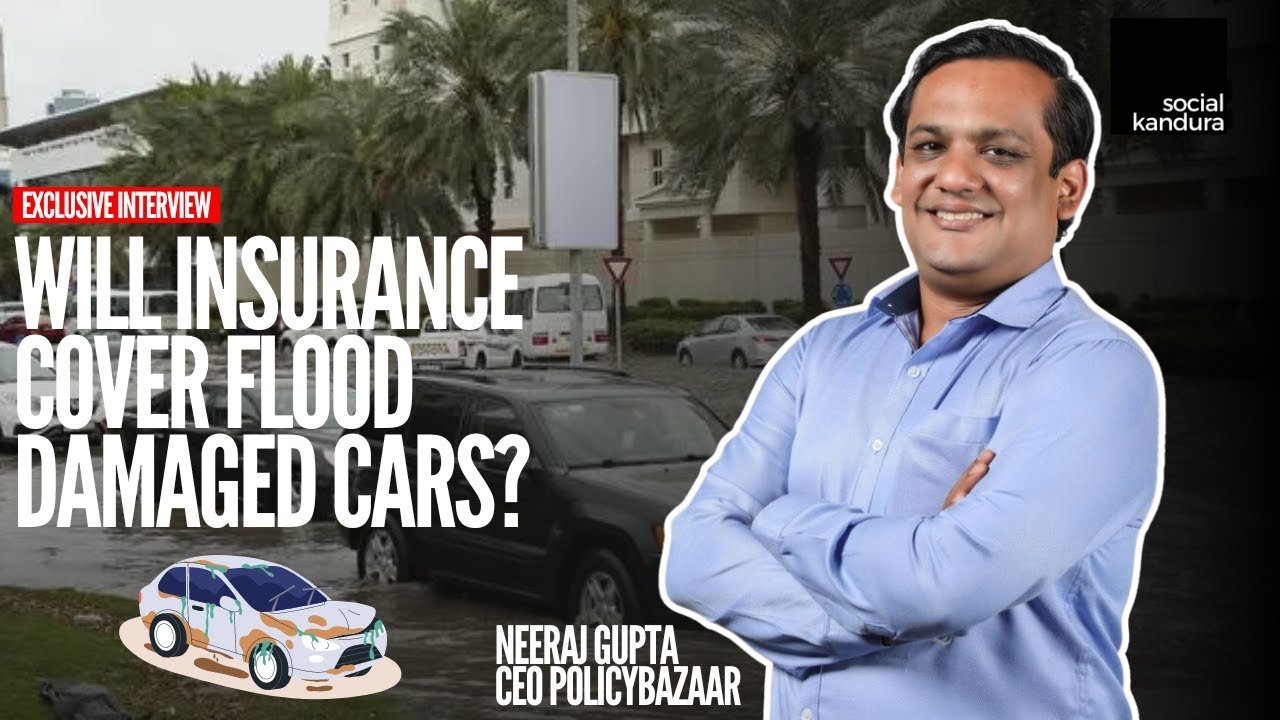
Is car insurance flood damage UAE cover something you can count on? After the unprecedented floods in April 2024, our followers sent us a flood of questions about what insurance does and does not cover. So we sat down with Neeraj Gupta, CEO of PolicyBazaar Middle East, to get clear answers on cars, homes, claims and what happens next.
His first message: be patient. The situation was unprecedented, and everyone was working around the clock to help consumers.
Key takeaways
- Third-party car insurance does not cover flood damage to your own car.
- A comprehensive policy makes you eligible for a flood claim, subject to terms and conditions.
- A car flooded while parked is generally covered; driving into standing water is unlikely to be.
- A building’s insurance will not pay for your car if the root cause was rain, not the building.
- Home insurance splits into building and contents cover, and some landlords also insure against loss of rent.
Does car insurance cover flood damage in the UAE?
It depends on your policy. There are two main types of motor insurance in the UAE:
- Third-party insurance covers the damage your car causes to someone else. If you only have third-party cover, flood damage to your own car will not be covered.
- Comprehensive insurance makes you eligible for a flood claim. The key word is eligible: there are terms and conditions.
Parked car vs driving through water
If your car was parked, for example in a community’s basement car park or outside your villa, and it flooded because of the rain, it is covered under a comprehensive policy. But if you saw standing water and decided to drive through it anyway, the claim will not be covered.
How do insurers tell the difference? Much of it comes down to inspection. When the garage opens the car, it can see whether water simply crept in while the car was off, or whether it was sucked into the engine while running. PolicyBazaar advises customers to keep any photos and videos they have. As the CEO put it, insurance is for events you cannot plan for, not for driving into danger.
Is the building responsible if my car flooded in its basement?
Not usually. Insurance works on the principle of proximate cause, the immediate, root cause of the loss. Even if the building is insured, the root cause of your car’s damage was the rain and the flooding, not anything the building did. If everything outside was also flooded, you cannot really blame the building’s drainage.
Home insurance: building, contents and loss of rent
Home insurance is broadly split into cover for the property itself and cover for its contents, or both. If you only insured the building, damaged furniture such as a flooded sofa will not be covered. The value you declared also matters: if you insured a home for AED 2 million but its market value is AED 5 million, the claim will be worked out differently.
Many Dubai landlords also buy cover for loss of rent. If a home becomes uninhabitable because of flooding, rather than poor maintenance, the tenant can move out and the insurer pays the landlord the lost rent.
What to expect after a flood: claims, garages and premiums
- Expect delays. Garages were overwhelmed, some were flooded themselves, and repair capacity cannot grow overnight.
- Replacement cars may run out. Policies typically include a replacement car for around 7 days, but flood repairs take longer, and roadside assistance providers were stretched too.
- Used car demand may rise. Families still need transport, so many will rent or buy second-hand in the short term.
- Bigger claims. Engine damage can cost tens of thousands of dirhams, and many cars could be total losses, which may push premiums up over time.
Insurers were supportive, with dedicated teams working around the clock and claims heads out inspecting garages.
Can you switch from third-party to comprehensive?
Yes, if your car was not damaged in the floods. You will need dated pictures, a live video of the car switched on and a passing certificate. The CEO’s advice: your car is one of the assets you use every day, so protect it with comprehensive insurance. You can compare policies on PolicyBazaar UAE.
Car insurance flood damage UAE: frequently asked questions
Does third-party car insurance cover flood damage in the UAE?
No. Third-party insurance only covers damage your car causes to others, so flood damage to your own car is not covered.
Does comprehensive car insurance cover flood damage?
A comprehensive policy makes you eligible for a flood claim, subject to its terms and conditions. A car flooded while parked is generally covered.
Will insurance pay if I drove through floodwater?
Driving into visible standing water is unlikely to be covered, because insurance is meant for events you cannot plan for, not for driving into danger.
Is my building liable if my car flooded in the basement car park?
Usually not. Claims follow the proximate cause, and if the flooding was caused by rain rather than a fault in the building, the building is not responsible.
Can I upgrade from third-party to comprehensive car insurance?
Yes, provided your car was not damaged. You will typically need dated photos, a live video of the car running and a passing certificate.
This article reflects the insurer’s general guidance in our interview and is not financial or legal advice. Always check your own policy terms.
Watch the full interview on YouTube, and find more UAE driving guides in our Automotive section, including the Sheikh Zayed Road story.