

Sheikh Zayed Road history is the story of how Dubai grew up. Known as the E11, Sheikh Zayed Road is one of the most famous roads in the world and one of the longest in the UAE, spanning about 558 km and connecting Abu Dhabi to Ras Al Khaimah via Dubai. Many of the city’s most iconic landmarks sit along it. Some compare it to the I-95 in the US or the M25 in the UK: it is the lifeline of the country.
Key takeaways
- The E11 runs about 558 km, from Abu Dhabi through Dubai to Ras Al Khaimah.
- In the 1970s, the journey between Dubai and Abu Dhabi meant crossing sand tracks along the coast.
- Construction began at Jebel Ali in 1971 with a single carriageway road.
- Today the highway has up to 14 lanes, with dedicated bus lanes and fast-track lanes.
- Salik tolls help fund the upkeep of the concrete, pothole-free road.
Before the road: sand tracks between Dubai and Abu Dhabi
Back in the 1970s, travelling between Dubai and Abu Dhabi was a gruelling task. Drivers followed sand tracks running parallel to the coastline, and many people did not know the right way across. Cars regularly got stuck or broke down, and with no mobile phones or communication systems, if you were stuck, you were truly stuck until someone came along to help. Taxi drivers knew their way around the tracks and were often the only reliable way to make the journey.
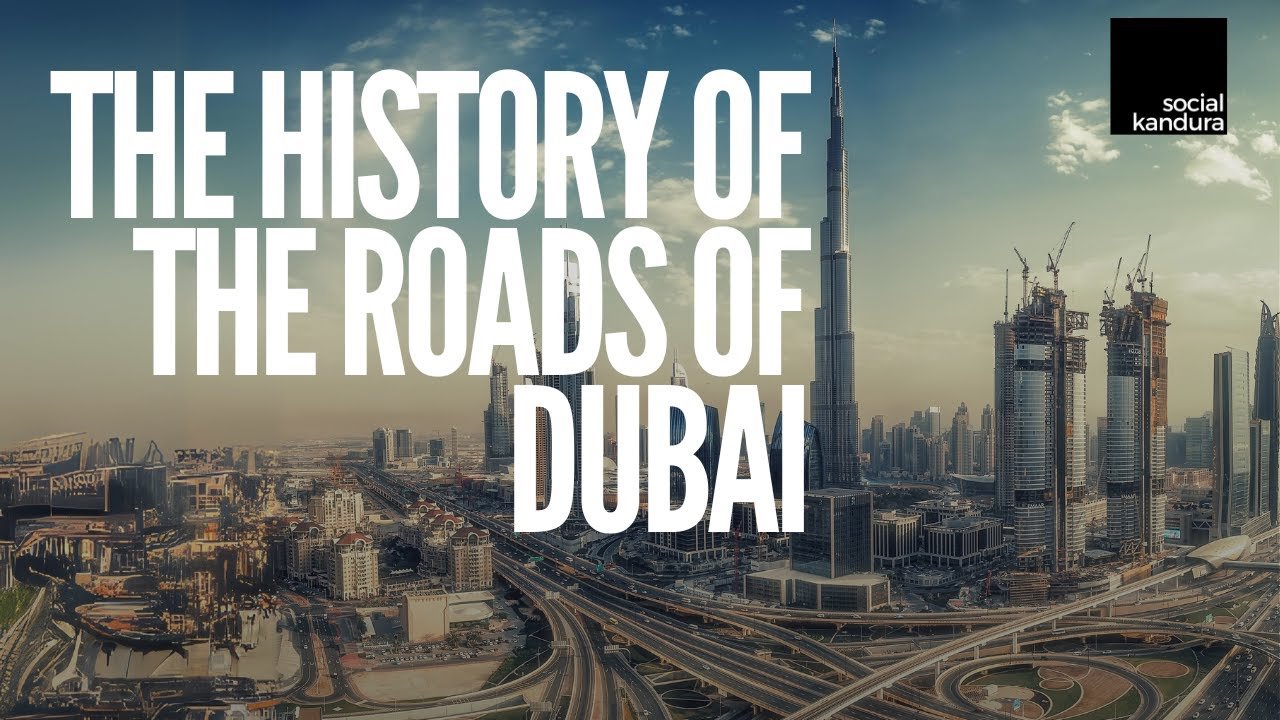
How Sheikh Zayed Road was born
Sheikh Rashid proposed a road starting from the port of Jebel Ali. There was rough track access to Jebel Ali, but no proper road, so connecting Dubai and Abu Dhabi remained a challenge. Construction began at Jebel Ali, and in 1971 a single carriageway road was developed to link Dubai with Abu Dhabi.
Think about that: a single lane each way in 1971, and today a highway of up to 14 lanes. Once known as the Defence Road, it was officially renamed Sheikh Zayed Road, and in the 1990s major master plans along the route turned it into the backbone of the city. After Sheikh Zayed passed away, the name was kept in tribute to the man the road was named after, and it is still Sheikh Zayed Road today.
The E11 and Dubai’s parallel highways
To support Dubai’s rapid growth, four parallel highways were built to share the load:
- Sheikh Zayed Road (E11), the only one of the four with Salik tolls
- Sheikh Mohammed bin Zayed Road (E311)
- Al Khail Road (E44)
- Dubai Al Ain Road (E66)
Rules of the road on Sheikh Zayed Road
Sheikh Zayed Road is monitored by speed cameras along its length. Always stick to the posted limit; you can read about how limits are changing elsewhere in the UAE in our story on the E311 speed limit cut. There is also a minimum speed on parts of the road, which the video explains varies from about 60 to 80 km/h depending on the section, and fines can be issued for driving too slowly.
One unwritten rule matters most: the far-left lane is for overtaking and the fastest traffic, while the slowest vehicles and heavy trucks keep to the far right. Respecting this helps prevent accidents caused by big differences in speed.
Built to last, paid for by Salik
Sheikh Zayed Road is made of concrete and is famously pothole-free. It has survived rain, hail and everything else thrown at it, and still has a flat, smooth surface. Maintaining it comes at a huge cost, and one way the Dubai government recovers it is through Salik, the toll system that charges each time you pass a gate. Read more about Salik’s plans to expand.
With multiple lanes, dedicated bus lanes and fast-track lanes, Sheikh Zayed Road is more than a road. It is a feat of engineering and the spinal cord of Dubai.
Sheikh Zayed Road history: frequently asked questions
When was Sheikh Zayed Road built?
Construction started at Jebel Ali, and a single carriageway road linking Dubai to Abu Dhabi was developed in 1971.
How long is Sheikh Zayed Road?
As the E11, the road spans about 558 km from Abu Dhabi through Dubai to Ras Al Khaimah.
How many lanes does Sheikh Zayed Road have?
Sheikh Zayed Road has up to 14 lanes, along with dedicated bus lanes and fast-track lanes.
Which lane is the fast lane on Sheikh Zayed Road?
The far-left lane is the overtaking lane for the fastest traffic. Slower vehicles and heavy trucks should keep to the far right.
Is there a toll on Sheikh Zayed Road?
Yes. Salik tolls are charged on Sheikh Zayed Road, and they help cover the cost of maintaining it.
For more UAE road stories and driving rules, visit our Automotive section, check the RTA for official updates, and watch The Sheikh Zayed Road Story on YouTube.