
Growing up in Dubai means experiencing a multicultural environment where children from different nationalities share schools, neighbourhoods and everyday experiences. KHDA’s 2024–25 education figures show that Dubai’s private schools welcomed 387,441 students representing 185 nationalities. This diversity shapes childhood in the emirate, from classroom friendships and cultural celebrations to language learning and exposure to different traditions.
- Location: Dubai, UAE
- Relevant organisations: KHDA, Dubai Media Office and UAE Government
- Education data: 2024–25 academic year
- Who is affected: Children, parents, schools and families living in Dubai
- Key finding: 387,441 private school students from 185 nationalities
- What’s next: Continued focus on education, cultural awareness and children’s wellbeing
What is it like to grow up in Dubai? For children living in the emirate, childhood often means sharing classrooms with friends from different countries, celebrating festivals from different cultures and watching their city change as new neighbourhoods, attractions and landmarks take shape.
Dubai’s multicultural population makes it a distinctive place for children to experience different traditions while growing up. According to the Knowledge and Human Development Authority (KHDA), private schools in Dubai had 387,441 students from 185 nationalities during the 2024–25 academic year.
These numbers offer a glimpse into the environment shaping a generation of young residents. Beyond school lessons and family outings, growing up in Dubai also involves discovering different cultures, developing friendships and understanding what home means in a city where people come from across the world.
Growing up in a city where different cultures meet
One of the defining parts of childhood in Dubai is the opportunity to interact with people from different cultural backgrounds. Children may grow up celebrating Eid with one group of friends, attending a Diwali gathering with another and learning about Christmas traditions through their classmates.
KHDA’s 2024–25 school landscape report found that the average private school in Dubai had students from 53 nationalities. Eleven schools had students representing more than 100 nationalities.
The diversity also extends to the education system. Dubai’s private schools offer different international curricula, including British, Indian, American and International Baccalaureate programmes.
For children, this means meeting classmates who may speak different languages at home, follow different customs and have different family traditions. These everyday interactions can introduce them to cultures beyond their own.
It also gives parents opportunities to share their traditions while allowing children to develop an understanding of the communities around them.
School life goes beyond classrooms and textbooks
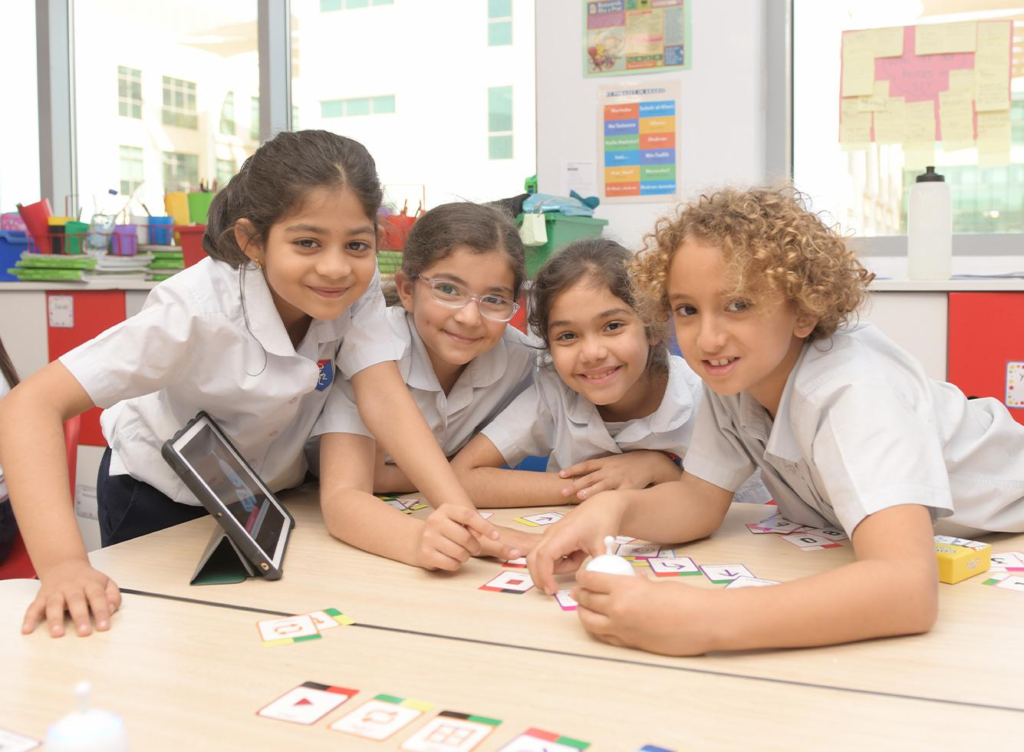
For many children, school is where some of their earliest friendships take shape. In Dubai, these experiences take place in an education system that brings together families from across the world.
KHDA reported that 227 private schools operated in Dubai during the 2024–25 academic year, offering 17 different curricula. Ten new schools opened during that period.
The latest 2025–26 private school landscape figures show that enrolment reached 388,731 students, with children representing 195 nationalities. This reflects the continued diversity of Dubai’s education sector.
Early childhood education is also part of this picture. KHDA’s 2024–25 early childhood landscape report recorded 29,634 children enrolled across 312 centres. They represented 163 nationalities and had access to 17 different curricula.
These figures show how cultural exposure can begin well before children enter primary school.
School life also includes activities outside regular lessons. Sports, arts, music, language programmes and school celebrations give children different ways to discover their interests and build friendships.
For families, the range of curricula and educational options also means they can consider different learning approaches while living in the emirate.
Learning about Emirati culture while growing up in Dubai
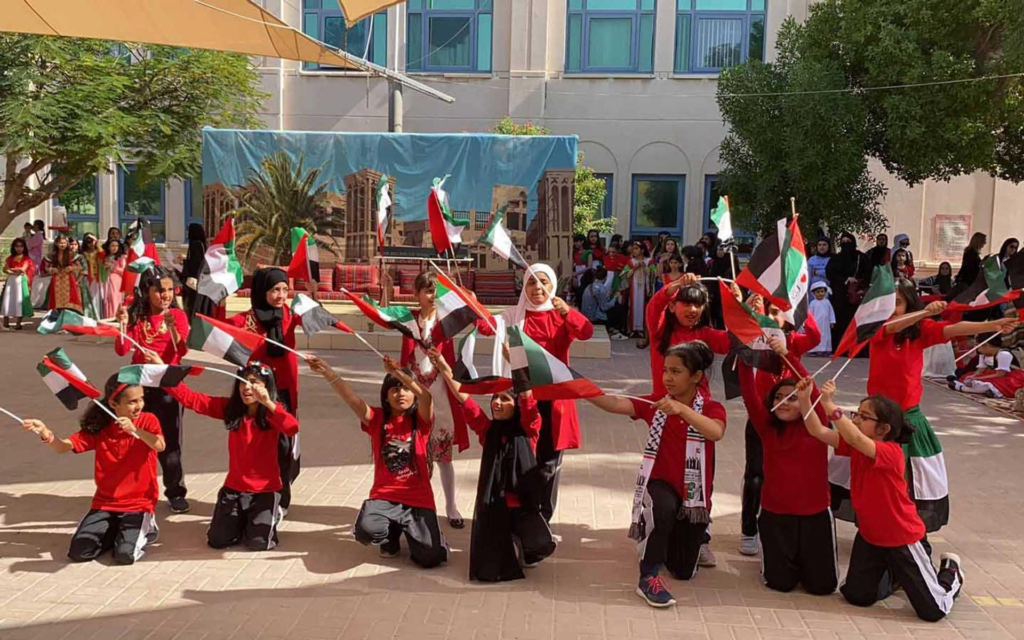
Dubai’s international population does not mean that local traditions are absent from children’s everyday experiences. Emirati heritage, Arabic language and national celebrations remain important parts of the city’s cultural environment.
Events such as UAE National Day, now known as Eid Al Etihad, introduce children to the country’s history, identity and traditions. Schools and communities also organise activities around occasions such as Flag Day, Ramadan and Eid.
For children from expatriate families, these experiences can provide an introduction to the country they call home. Emirati children, meanwhile, grow up sharing their heritage with classmates from different backgrounds.
Arabic language education is another part of this connection.
Dubai Administrative Resolution No. 48 of 2025 requires KHDA-authorised early childhood educational institutions to teach Arabic to both Arabic-speaking and non-Arabic-speaking children. The resolution also encourages play-based and inquiry-led learning that promotes Emirati values, identity and culture.
This approach recognises the importance of introducing children to the country’s language and heritage from an early age.
Family outings create everyday Dubai memories
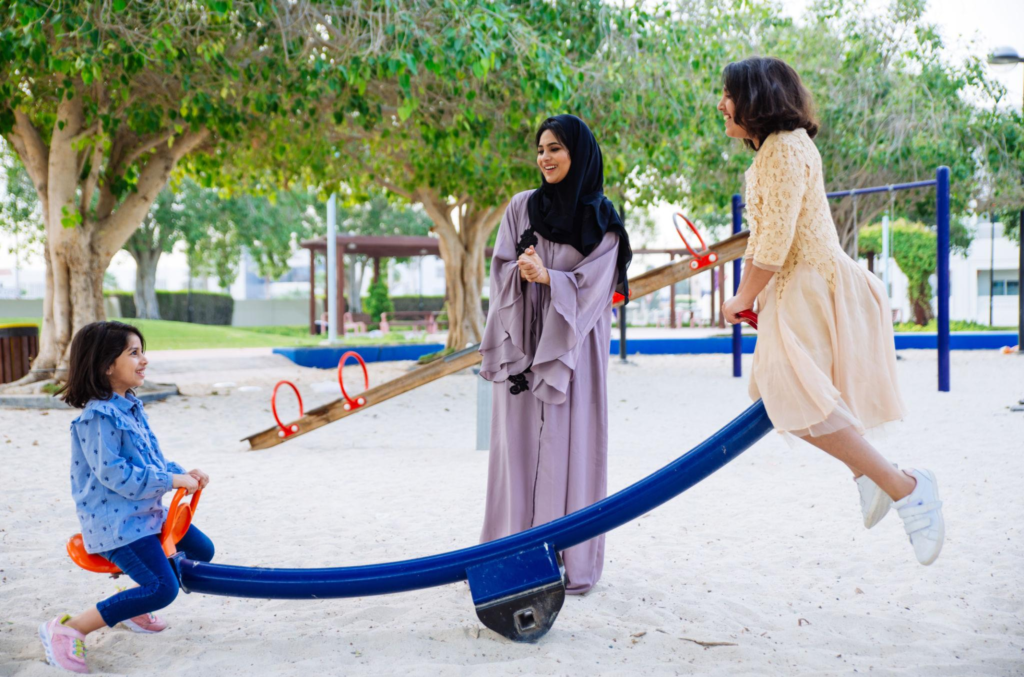
Childhood memories are not limited to school. Family outings, weekend activities and time spent outdoors also shape how children experience the city.
Dubai offers different settings for families to spend time together, including public beaches, neighbourhood parks, libraries, cultural attractions and recreational spaces.
Some children may associate growing up in Dubai with trips to the beach, cycling with friends or visiting local attractions during school holidays. Others may remember family gatherings, community events and celebrations organised around different festivals.
The city’s changing landscape also gives younger residents a different perspective on their surroundings. New developments, transport connections, entertainment venues and public spaces continue to influence how families move around and spend their free time.
However, children’s experiences are not identical. Their routines depend on where they live, their family circumstances, school schedules and personal interests.
That variety is an important part of understanding childhood in a city as diverse as Dubai.
Technology is changing the way children grow up
Children growing up today experience a world where technology is part of education, entertainment and communication.
In Dubai, digital learning tools, online platforms and interactive classroom resources are increasingly relevant to the way students learn and access information.
Technology also influences how children spend their free time. Gaming, digital content, educational applications and communication platforms are part of many young people’s routines.
This creates opportunities for learning and creativity, but it also makes digital awareness and responsible screen habits important topics for parents and schools.
The UAE’s wider focus on digital transformation means children are growing up in a society where technology plays an increasingly visible role. Helping them understand online safety, privacy and responsible digital behaviour is therefore an important part of their development.
Children’s wellbeing matters as much as academic success
A child’s experience of growing up in Dubai cannot be measured through school enrolment figures alone. Happiness, friendships, emotional wellbeing and a sense of belonging are also important.
KHDA introduced the Dubai Student Wellbeing Census in 2017 to understand students’ experiences across areas such as happiness, quality of life, school engagement and wellbeing. The initiative ran for five years, ending in 2021.
The census highlighted the importance of listening to students and understanding their experiences beyond academic results.
The UAE also has a legal framework for protecting children. Federal Law No. 3 of 2016, known as Wadeema’s Law, establishes children’s rights to education, healthcare, protection and an appropriate standard of living.
Together, these measures reflect the importance of creating environments where children can learn, develop and feel safe.
Understanding childhood in Dubai matters to families, schools and the wider community because today’s children will shape the emirate’s future.
The city’s multicultural environment gives young residents opportunities to build friendships across nationalities and learn about different traditions. At the same time, Arabic language education and cultural initiatives help introduce them to the UAE’s heritage.
Parents benefit from understanding the educational and developmental environment available to their children, while schools and early childhood centres play an important role in supporting learning and wellbeing.
As Dubai continues to grow, providing children with access to quality education, safe spaces and meaningful cultural experiences will remain important.
FAQs
What is it like growing up in Dubai?
Children growing up in Dubai experience a multicultural environment with diverse schools, international communities, cultural celebrations and family activities. Their individual experiences vary depending on their family, school and neighbourhood.
How many nationalities are represented in Dubai schools?
According to KHDA’s 2025–26 private school landscape figures, students from 195 nationalities attend private schools in Dubai.
Do children learn Arabic in Dubai schools and nurseries?
Yes. Arabic is part of the UAE’s education environment. Dubai Administrative Resolution No. 48 of 2025 also requires KHDA-authorised early childhood institutions to incorporate Arabic into their curricula for Arabic-speaking and non-Arabic-speaking children.
How does Dubai encourage children to learn about Emirati culture?
Children encounter Emirati culture through Arabic language education, school activities, national celebrations and community events marking occasions such as Eid Al Etihad, Flag Day and Eid.
What protects children’s rights in the UAE?
Federal Law No. 3 of 2016, known as Wadeema’s Law, establishes protections covering children’s education, healthcare, safety and overall welfare.
A childhood shaped by different experiences
Growing up in Dubai means being part of a city where different cultures, languages and traditions exist alongside one another. From school friendships and family outings to learning about Emirati heritage, children experience different aspects of life in the emirate as they grow.
The official education figures provide a clear picture of this diversity. However, every child’s story is different, shaped by their family, interests, friendships and everyday experiences.
Follow Social Kandura for more updates on local news and things to do in Dubai and across the UAE.