

Dubai has a portfolio of active projects worth AED 2.1 trillion, announced by Sheikh Mohammed bin Rashid Al Maktoum at the Mohammed bin Rashid Leadership Forum on 13 October 2026. The projects cover real estate, aviation, transport, utilities and financial infrastructure. They are expected to support the emirate’s future growth, meet residents’ needs, and create more opportunities for businesses and investors.
- Location: Dubai, UAE
- Announced by: Sheikh Mohammed bin Rashid Al Maktoum, Vice President and Prime Minister of the UAE and Ruler of Dubai
- Announcement date: 13 October 2026
- Who is affected: Residents, property buyers, businesses, investors and travellers
- Business impact: Investment across real estate, aviation, transport and financial services
- What’s next: Further projects are expected to be announced as Dubai enters its next phase of development.
Dubai has announced AED 2.1 trillion worth of active development projects covering housing, transport, aviation and essential infrastructure. Sheikh Mohammed bin Rashid Al Maktoum shared the figures during the Mohammed bin Rashid Leadership Forum at Dubai World Trade Centre on 13 October 2026.
The portfolio includes AED 1.1 trillion in real estate development through 2030, investment in Al Maktoum International Airport, new metro lines and major upgrades to water, electricity and drainage networks.
The announcement outlines Dubai’s plans to accommodate future population growth, strengthen its international connectivity and expand the infrastructure needed to support its economy.
Dubai plans AED 1.1 trillion in real estate development
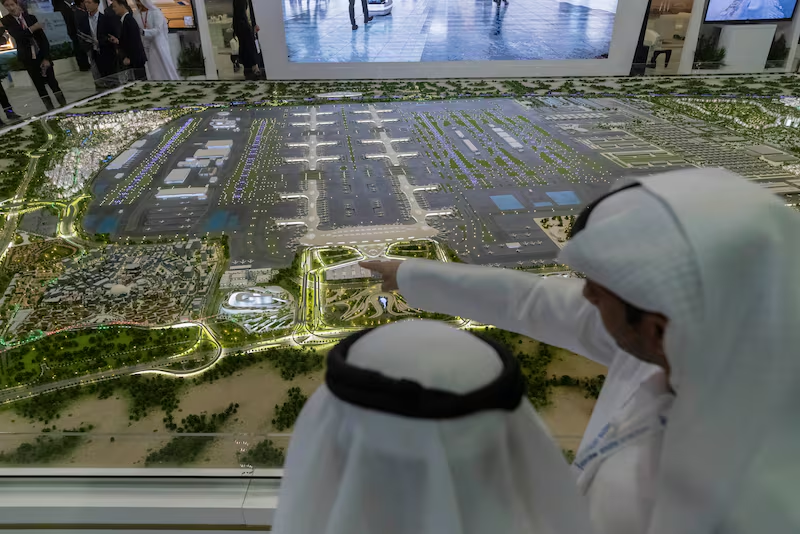
Real estate accounts for the largest share of Dubai’s announced project portfolio. According to the figures shared at the forum, AED 1.1 trillion has been allocated to real estate development through 2030, with around 350,000 residential units planned.
The scale of development points to continued expansion across Dubai’s residential property market. New housing will need to be supported by roads, public transport, utilities, schools and other services as more people live and work across the emirate.
For property buyers and investors, the announcement highlights the scale of Dubai’s development pipeline. However, the figures do not establish how individual projects will affect property prices, rents or returns. Those outcomes will depend on factors such as location, demand, supply and project delivery.
Al Maktoum International Airport leads aviation expansion
Dubai’s aviation plans form another major part of the investment portfolio.
The announced allocation for Al Maktoum International Airport stands at AED 128 billion. The airport is designed to handle up to 260 million passengers annually, making it a central part of Dubai’s long-term aviation strategy.
The investment also includes AED 328 billion for the expansion of the Emirates and flydubai fleets. A further AED 18.7 billion has been allocated for a new Emirates engineering and maintenance complex.
Together, these projects cover airport capacity, airline operations and aircraft maintenance. They are relevant to Dubai’s position as an international travel hub, connecting passengers and businesses across major global markets.
The planned expansion will also require supporting infrastructure, including transport links and services for the growing aviation sector. The announced figures indicate the scale of the investment, although they do not mean that all the projects are already complete or operational.
New metro lines and road upgrades aim to improve connectivity
Dubai is also investing in its transport network, with AED 100 billion allocated for road upgrades and the Dubai Metro Blue and Gold lines.
The two metro projects are intended to extend public transport access across additional parts of the emirate.
The Dubai Metro Blue Line is planned to span 30 kilometres, with 14 stations serving nine districts. The Roads and Transport Authority has set a target opening in 2029.
Meanwhile, the AED 34 billion Gold Line, approved in April 2026, will extend 42 kilometres and include 18 stations. The fully underground line is scheduled for completion on 9 September 2032, according to the announced project timeline.
The Gold Line is planned to connect with the existing Dubai Metro network and Etihad Rail, strengthening links between different transport systems.
For residents, these developments could provide more public transport options as the city expands. The actual impact on journey times and accessibility will depend on station locations, service frequency and the completion of supporting infrastructure.
Water, electricity and drainage receive major investment
Dubai’s development plans extend beyond housing and transport. The announced portfolio includes AED 151 billion for new power and water grid infrastructure and AED 80 billion for the Dubai Strategic Sewerage Tunnels system.
A further AED 30 billion has been allocated to the Tasreef rainwater drainage project.
These investments address essential services that support residential communities, commercial areas and industrial facilities. As new districts develop, reliable water and electricity networks become increasingly important, while drainage systems help the city manage rainfall and reduce the risk of water accumulation.
The figures also show how infrastructure planning forms part of Dubai’s wider development strategy. New buildings and transport routes need to be supported by utilities and public services to function effectively over the long term.
Dubai International Financial Centre and exhibition facilities expand
The financial and business sectors also feature in the investment portfolio.
AED 100 billion has been set aside for Phase 2 of the Dubai International Financial Centre (DIFC). The expansion is expected to support the continued development of one of Dubai’s key financial districts.
The portfolio also includes AED 10 billion for the Dubai Exhibition Centre expansion. Exhibition venues play a role in hosting trade shows, conferences and business events, attracting international companies and industry professionals.
These developments add to the broader investment in commercial infrastructure. Their long-term contribution will depend on how projects progress, the businesses they attract and demand for additional space.
Why It Matters?
Dubai’s AED 2.1 trillion project portfolio matters because it brings together several areas that directly affect life and business in the emirate.
Residents stand to benefit from planned housing, expanded transport links and investment in essential services. Travellers and airlines are likely to follow progress on airport and fleet expansion, while businesses may find opportunities linked to construction, aviation, finance and infrastructure.
Investors will also be watching how projects move from announcements to construction and completion. The stated investment figures indicate the scale of the plans, but individual timelines and delivery milestones remain important.
At the forum, Sheikh Mohammed said Dubai was building a “city within a city” and indicated that further projects would be announced. The next stage will be to track those announcements alongside confirmed construction progress and completion dates.
FAQs
How much are Dubai’s active projects worth?
Dubai has announced a portfolio of active projects worth AED 2.1 trillion across real estate, aviation, transport and infrastructure.
How many homes are planned in Dubai by 2030?
The announced real estate development portfolio includes around 350,000 residential units, supported by AED 1.1 trillion in investment through 2030.
How much is Dubai investing in Al Maktoum International Airport?
AED 128 billion has been allocated to Al Maktoum International Airport, which is designed to handle up to 260 million passengers annually.
When will the Dubai Metro Blue and Gold lines open?
The Blue Line has a target opening in 2029. The Gold Line is scheduled for completion on 9 September 2032.
Will all AED 2.1 trillion of projects be completed by 2030?
No such blanket deadline has been announced. The real estate investment allocation runs through 2030, while individual projects have different schedules. The Gold Line, for example, has a planned completion date in 2032.
Dubai’s AED 2.1 trillion project portfolio covers major developments in housing, aviation, transport, utilities and business infrastructure. With further projects expected to be announced, progress on individual investments and their delivery timelines will be important indicators of the emirate’s next phase of growth.
Follow Social Kandura for more updates on local news and things to do in Dubai and across the UAE.
Read More