
Dubai is introducing a new visual identity for streets, neighbourhoods and house number plates as part of a wider addressing system covering 186 areas across the emirate. The Roads and Transport Authority (RTA), Dubai Municipality and the Supreme Committee for Urban Planning are overseeing the rollout, which begins in the fourth quarter of 2026 and will continue through 2030. The system is designed to make it easier for residents, visitors, delivery workers and emergency services to identify locations.
- Location: Dubai, UAE
- Authorities: Supreme Committee for Urban Planning, RTA and Dubai Municipality
- Status: Rollout begins in Q4 2026 and continues through 2030
- Who is affected: Residents, visitors, businesses and property owners across Dubai
- Business impact: Easier location identification for deliveries, visitors and customers
- What’s next: More than 2,000 signs will be installed or replaced in the first phase
Dubai is getting a new street signage system
Dubai is introducing a new colour-coded street sign system as part of a redesigned addressing system for neighbourhoods, streets and properties.
According to the RTA, the project will eventually cover 186 areas across 19 sectors. The first phase will see more than 2,000 signs installed or replaced in Za’abeel 1, Za’abeel 2, Nad Al Sheba, Al Khawaneej 1 and Nazwa.
The rollout is scheduled to begin in Q4 2026, with the wider programme continuing until 2030.
The initiative is being implemented by the Supreme Committee for Urban Planning in coordination with the RTA and Dubai Municipality. It aims to give Dubai a more consistent system for identifying areas and navigating streets.
How will Dubai’s new area colours work?
The new signage will use five colours linked to the geographical character of different areas.
RTA has confirmed that blue will be used for areas close to the sea, while gold will represent desert areas. The authority has not yet publicly detailed the meaning of all five colours, so the remaining colour categories should not be assumed until an official breakdown is released.
The colour system will be used across the new visual identity, helping people recognise different parts of Dubai more easily.
Alongside area signs, the programme includes redesigned street-name signs and house number plates.
The approach gives the addressing system a visual element rather than relying only on street names and numbers.
What will the new house number plates include?
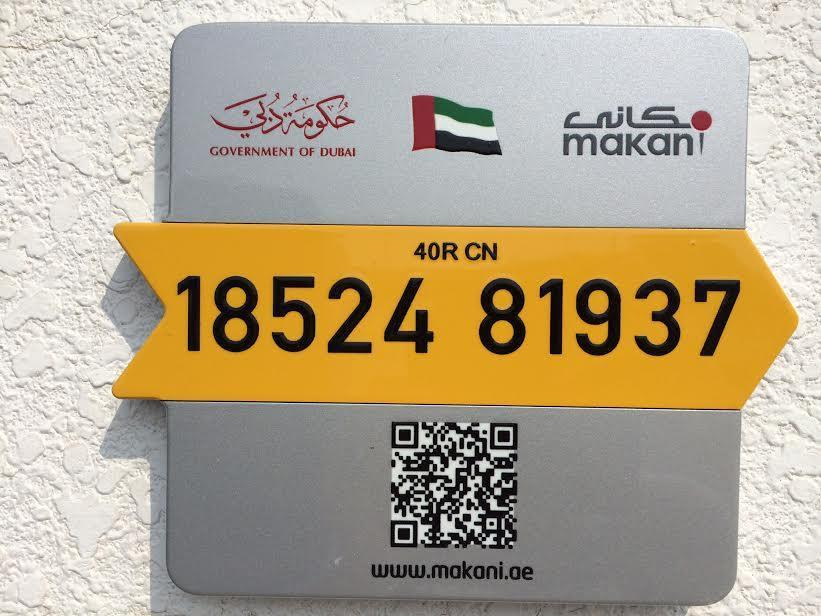
The redesigned house number plates will connect physical addresses with Dubai’s digital addressing infrastructure.
According to the RTA, each new plate will display the property’s Makani number along with a QR code.
Scanning the QR code will provide location-related information, including the sector and area, street and area names, nearby points of interest and other details connected to the location.
This could be particularly useful for people visiting unfamiliar neighbourhoods or trying to locate a specific property.
The system also builds on Dubai’s existing Makani addressing network, which provides location information for buildings and entrances across the emirate.
Which Dubai areas will get the new signs first?
The first phase will focus on five areas:
- Za’abeel 1
- Za’abeel 2
- Nad Al Sheba
- Al Khawaneej 1
- Nazwa
More than 2,000 signs will be installed or replaced across these locations.
The wider rollout will not happen everywhere at once. Authorities will prioritise areas based on several factors, including population density, urban growth, the presence of residential and tourist attractions, the importance and activity of an area, and the number of streets that do not currently have official addresses.
This phased approach will allow the new system to expand across Dubai over several years.
Will the new identity extend beyond street signs?
Yes. The new visual identity is planned to become part of other location-related services across Dubai.
The RTA said the system will eventually extend to bus stops, mobile applications and area map boards.
This means the same visual language could appear across physical signs and digital services, giving residents and visitors a more consistent way to recognise areas.
The project also follows an earlier approval by the Dubai Executive Council in July 2026 for a new visual identity linked to the emirate’s addressing system.
The broader objective is to improve geographic orientation while giving Dubai’s neighbourhoods a more recognisable identity.
For residents, the changes could make it simpler to identify streets, neighbourhoods and properties, particularly in areas where roads and developments continue to expand.
Visitors could also benefit from clearer area identification and QR-based information when navigating unfamiliar parts of the city.
Businesses may find the system useful for customer visits, deliveries and location sharing. A clearer physical addressing network can also make it easier to identify properties without relying solely on verbal directions.
The integration of Makani numbers and QR codes also adds a digital layer to the physical signage, connecting what people see on the street with location information available through technology.
As Dubai continues to add residential communities, attractions, roads and commercial destinations, having a consistent addressing system becomes increasingly important.
When will Dubai’s new street signs be completed?
The new addressing system will be rolled out in phases from Q4 2026 through 2030, according to the RTA.
The first stage covers five areas, while subsequent phases will expand the system to other parts of Dubai based on population, development and addressing needs.
The project is therefore expected to become increasingly visible across the emirate rather than changing all street signs at once.
FAQs
When will Dubai’s new street signs start appearing?
The first phase is scheduled to begin in the fourth quarter of 2026, with the full rollout continuing through 2030.
Which areas will get the new signs first?
Za’abeel 1, Za’abeel 2, Nad Al Sheba, Al Khawaneej 1 and Nazwa are included in the first phase.
How many areas will the new addressing system cover?
The programme will cover 186 areas across 19 sectors in Dubai.
What will be included on the new house number plates?
The new plates will include a property’s Makani number and a QR code that provides additional location and nearby-area information.
What do the new sign colours mean?
The system uses five colours linked to the character of different areas. RTA has confirmed blue for areas near the sea and gold for desert areas. Details of the other three colours have not yet been officially specified.
Dubai’s addressing system is getting a digital upgrade
Dubai’s new street signage programme combines clearer physical signs with Makani numbers and QR-enabled property plates. With the first phase starting in Q4 2026 and the wider rollout continuing until 2030, residents and visitors will gradually see a new visual identity across more parts of the city.
The changes are designed to make finding areas, streets and properties simpler while creating a consistent addressing system that can work across physical and digital services.
Follow Social Kandura for more updates on local news and things to do in Dubai and across the UAE.