

Dubai International Airport (DXB) handled 50.4 million passengers between January and September 2026, according to Dubai Airports. Passenger numbers improved during the third quarter as summer travel demand picked up, although traffic remained below 2025 levels amid regional aviation disruption. The figures highlight the gradual recovery of Dubai’s aviation sector, with India continuing to lead international passenger markets.
- Location: Dubai International Airport (DXB), Dubai, UAE
- Organisation: Dubai Airports
- Reporting period: January to September 2026
- Passenger traffic: 50.4 million
- Business impact: Passenger traffic remains 28.1% lower year on year
- What’s next: DXB expects to welcome more than 70 million passengers in 2026
Dubai International Airport welcomed 50.4 million passengers during the first nine months of 2026, despite a 28.1% decline compared with the same period last year. Dubai Airports released the latest figures on November 17, highlighting an improvement in passenger demand during the summer months. The airport handled 18.8 million passengers between July and September, with August recording the highest monthly traffic. While the numbers show signs of recovery, ongoing regional disruption continues to affect airline operations and international travel demand.
DXB Records 18.8 Million Passengers in the Third Quarter
Dubai International Airport handled 18.8 million passengers in Q3 2026, marking an improvement from the previous quarter.
Passenger traffic during the third quarter was down 22.1% compared with the same period in 2025. However, the smaller year-on-year decline compared with the nine-month figure suggests that demand has gradually improved.
DXB recorded 13 million passengers in the second quarter, taking its first-half traffic to 31.5 million. Monthly passenger numbers also increased between April and June, rising from 3.5 million in April to 4.5 million in May and 5 million in June.
The upward trend continued through the summer, with August emerging as the busiest month of Q3, welcoming 6.6 million passengers.
Dubai Airports CEO Paul Griffiths said the airport expects to welcome more than 70 million passengers during 2026.
He also highlighted the importance of returning airlines and stronger network connectivity in supporting future growth.
India Remains Dubai Airport’s Largest Passenger Market
India continued to lead DXB’s international passenger markets during the third quarter, contributing 2.6 million passengers.
Saudi Arabia ranked second with 1.4 million passengers, followed by the United Kingdom with 1.3 million. Pakistan recorded 800,000 passengers, while the United States contributed 640,000 and Germany 480,000.
Among individual city destinations, London topped the list with 784,000 passengers. Mumbai followed with 528,000, narrowly ahead of New Delhi at 525,000.
Riyadh and Jeddah also featured among the busiest destinations, recording 500,000 and 490,000 passengers, respectively.
These figures underline the importance of Dubai’s air connectivity with India, the wider GCC and major international markets. For UAE residents, the strong Indian passenger contribution also reflects the continued demand for travel between Dubai and Indian cities.
Outbound leisure travel supported passenger numbers during the quarter as well. Milan recorded a 20% increase in passenger traffic, followed by Phuket at 17%, Cape Town at 14%, Barcelona at 13% and Denpasar at 11%.
More Airlines Resume Operations at Dubai International Airport
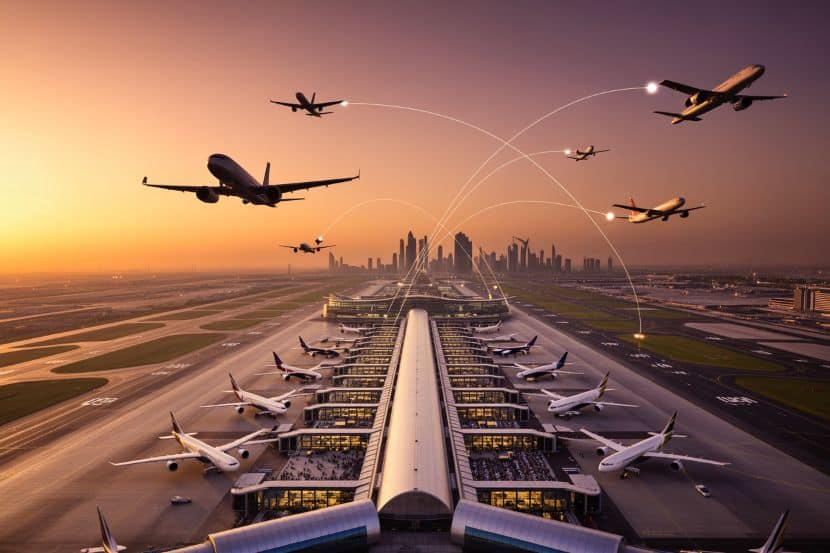
Airline connectivity is another important part of DXB’s recovery.
Dubai Airports reported that the airport was served by 57 airlines, connecting Dubai to 235 airport destinations across 101 countries.
British Airways resumed its services to Dubai earlier in November, joining other carriers that have returned to the airport, including Royal Air Maroc, SunExpress and Cebu Pacific.
The return of international airlines is particularly important for DXB because it handles a substantial number of connecting passengers.
In September, transit passengers accounted for 51% of total traffic, while travellers flying directly to and from Dubai represented 49%.
This balance is expected to shift towards direct passenger traffic during the winter season, when Dubai’s tourism calendar and major events attract more international visitors.
Stronger airline connectivity could also support tourism, hospitality and other businesses that depend on international arrivals.
Dubai Airport Increases Investment in AI and Biometric Technology
Alongside its focus on airline connectivity, Dubai Airports is expanding its use of technology to improve airport operations.
The airport operator is investing in artificial intelligence, predictive analytics and connected operational systems to manage passenger movement more efficiently.
These systems bring together information from different airport operations, including passenger flows, aircraft activity and airport facilities. AI-powered tools help identify potential bottlenecks before they affect airport operations.
Biometric processes and self-service facilities are also helping reduce manual steps during passenger journeys.
DXB’s Red Carpet smart corridor is one example of its biometric immigration technology. The system allows eligible passengers to complete passport-control procedures within seconds.
The airport’s operational figures also show how technology is supporting passenger services. During the first nine months of 2026, DXB handled 48 million bags. According to Dubai Airports, 91% of baggage was delivered within 45 minutes of arrival, while baggage-handling accuracy reached 99.73%.
The airport is also focusing on making better use of its existing facilities rather than depending entirely on physical expansion to accommodate future passenger demand.
Why It Matters for Dubai Residents and Travellers
Dubai International Airport plays an important role in the UAE’s tourism, hospitality and aviation sectors. Changes in passenger traffic can influence airline operations, hotel demand, airport services and travel connectivity.
The latest figures offer a mixed picture. While DXB has not returned to its previous passenger levels, the improvement during Q3 and the return of international airlines indicate that travel activity is gradually picking up.
For residents, stronger connectivity means more flight options as airlines rebuild their networks. For businesses, improving international arrivals could support demand across tourism, retail, hospitality and related sectors.
Dubai Airports expects passenger traffic to exceed 70 million in 2026. Meanwhile, Dubai’s longer-term aviation plans include the expansion of Al Maktoum International Airport (DWC), which is planned to accommodate up to 260 million passengers annually at full capacity.
FAQs
1. How many passengers did Dubai International Airport handle in 2026?
Dubai International Airport handled 50.4 million passengers between January and September 2026, according to Dubai Airports.
2. Why is DXB passenger traffic down in 2026?
Passenger traffic remained below 2025 levels amid regional conflict and its impact on airline operations, network connectivity and travel demand.
3. Which country contributed the most passengers to Dubai Airport in Q3 2026?
India was DXB’s largest country market, contributing 2.6 million passengers during the third quarter of 2026.
4. How many airlines operate at Dubai International Airport?
Dubai Airports reported that 57 airlines connected DXB to 235 airport destinations across 101 countries.
5. How many passengers does Dubai Airport expect in 2026?
Dubai Airports CEO Paul Griffiths said the airport expects to welcome more than 70 million passengers during 2026.
Dubai International Airport’s latest passenger figures show that travel demand is gradually improving, although the airport continues to operate below last year’s levels. India’s position as DXB’s largest passenger market, the return of international airlines and increased investment in airport technology will remain important factors as Dubai works towards its 2026 passenger target.
Follow Social Kandura for more updates on local news and things to do in Dubai and across the UAE.