

Dubai’s Roads and Transport Authority (RTA) has introduced the next generation of its Smart Test System (STS) for light-vehicle yard driving tests. Announced on 29 September 2026, the system uses artificial intelligence, computer vision, facial recognition, advanced data analytics and precise vehicle tracking to assess learner drivers. RTA says the system can calculate test results without human intervention, while also giving learners clearer information about where they made mistakes.
- Location: Dubai, UAE
- Organisation: Roads and Transport Authority (RTA)
- Status: New Smart Test System introduced on 29 September 2026
- Who is affected: Learners taking the covered light-vehicle yard tests
- Technology: AI, computer vision, facial recognition, RTK positioning and 3D mapping
- Tracking accuracy: Up to two centimetres using Real-Time Kinematic positioning
- Safety feature: Preventive automatic emergency braking
- What’s next: Test data can be connected with training systems for more targeted learner support
What is Dubai’s new AI driving test system?
Dubai RTA has introduced a next-generation AI-powered system that assesses learner drivers during light-vehicle yard tests. The technology monitors driving performance in real time, analyses manoeuvres and checks different elements of the assessment against standardised criteria.
RTA announced the system on 29 September 2026, describing it as part of its continued smart transformation of driver licensing services.
The system can calculate test results without human intervention in the scoring process. However, this does not mean that humans have been removed from Dubai’s entire driving-licensing process. The confirmed change applies to the automated assessment and result calculation within the covered Smart Test System.
How does the AI monitor learners during Dubai driving tests?
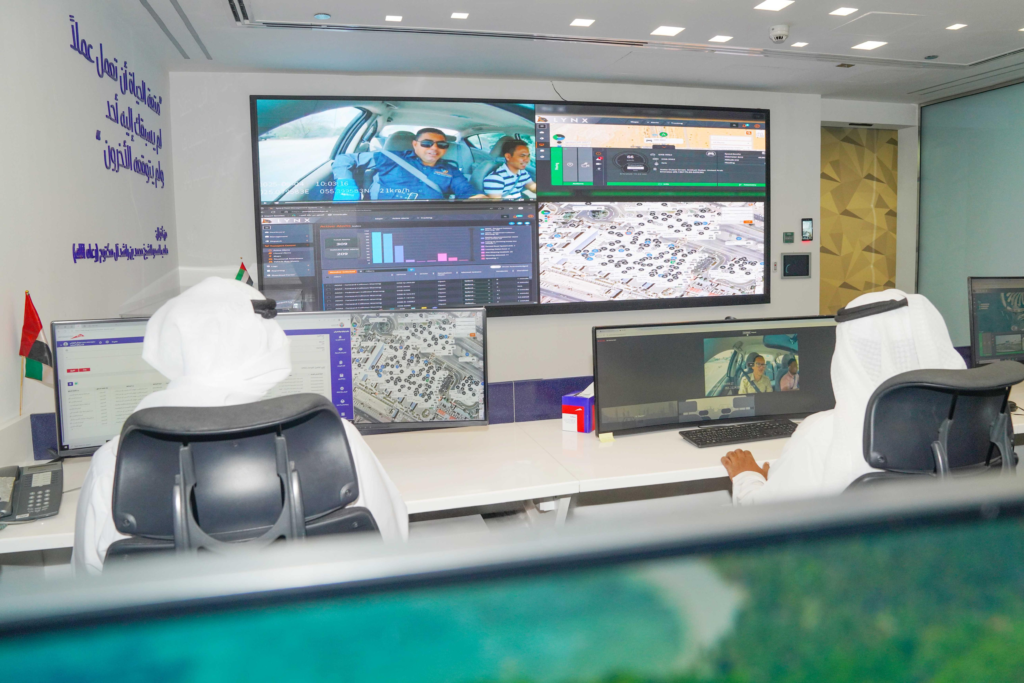
The Smart Test System uses technology installed in test vehicles to monitor several aspects of a learner’s performance.
The system can assess safety behaviours such as mirror checks, blind-spot checks and hand positioning on the steering wheel. It can also monitor vehicle manoeuvres, driving paths, parking positions and other parts of the yard test.
Facial recognition is used to verify the identity of the learner taking the assessment.
According to RTA, using technology to assess these elements against consistent criteria can reduce variations between individual assessments and make the testing process more standardised.
Sultan Al Akraf, Director of Drivers Licensing at RTA’s Licensing Agency, said the system represents an important step in the authority’s smart transformation of driver licensing services.
How accurately can the new system track a driving test?
The new system uses Real-Time Kinematic (RTK) positioning to track the test vehicle with accuracy of up to two centimetres.
This allows the technology to identify specific errors involving vehicle paths, parking positions and manoeuvres during the test.
An interactive 3D Dubai map can then show the route taken by the learner and identify locations where major and minor errors occurred.
For learners, this means the result can provide more detailed information than simply showing whether they passed or failed. The recorded route can help them understand where an error happened and which driving skills require further practice.
RTA says this visual information is intended to improve transparency and make test results easier for customers to understand.
Can Dubai’s AI driving test prevent a collision?
Yes. The test vehicles are equipped with AI-powered collision avoidance technology and preventive automatic emergency braking.
If the system detects a potential collision or another safety risk during the assessment, the technology can intervene to help prevent an incident.
RTA says the feature is designed to create a safer and more controlled testing environment by addressing potential risks before they develop into accidents.
The system is also designed to work under different weather and lighting conditions, including during daytime and night-time testing.
The emergency braking function has a safety role and is separate from the automated calculation of the learner’s test result.
Can learners see where they made mistakes?
Yes. One of the key features of the new system is its ability to provide a visual record of driving errors.
The interactive 3D map allows learners to review their route and see where major and minor mistakes were recorded during the assessment.
RTA also says test results can be integrated with training systems. This can help identify individual areas that require improvement and support more targeted training programmes.
For example, if a learner repeatedly struggles with a particular manoeuvre or parking position, the information from the assessment can help highlight that area for further practice.
This connects the testing process with training and gives learners more information to work with after an assessment.
Why is Dubai using AI in driving tests?
The new system is part of Dubai RTA’s wider use of smart technology across transport and licensing services.
RTA has been expanding the use of AI, smart cameras, sensors, digital systems and advanced training technology in its transport operations.
The latest driving-test system also comes as Dubai continues to develop its wider smart-mobility infrastructure. In September 2026, RTA and the Dubai Integrated Economic Zones Authority launched Dubai Mobility Labs at Dubai Silicon Oasis to test and certify autonomous and future mobility technologies.
The two initiatives have different purposes. The Smart Test System focuses on learner-driver assessments, while Dubai Mobility Labs supports testing and development of future mobility technologies. Both form part of Dubai’s broader adoption of technology in transport.
For people preparing for a Dubai driving licence, the new system means technology will play a larger role in the assessment of covered light-vehicle yard tests.
Learners can have their identity, driving behaviour, manoeuvres and vehicle movements assessed through automated systems. They can also receive more detailed information about errors made during the test.
For driving schools and training providers, the ability to connect assessment results with training systems could provide more specific information about areas where learners need additional practice.
The change also gives RTA a standardised digital framework for assessing driving performance. RTA says this is intended to improve fairness, efficiency and transparency in the testing process.
Importantly, RTA has not announced that every part of Dubai’s licensing process will operate without human involvement. The confirmed change concerns the automated assessment and calculation of results within the new Smart Test System.
FAQs
Does Dubai now use AI for driving tests?
Yes. Dubai RTA has introduced the next-generation Smart Test System for light-vehicle yard tests. It uses AI, computer vision, facial recognition, data analytics and vehicle-positioning technology to assess learner performance.
Are Dubai driving test results calculated by AI?
RTA says the new system calculates results without human intervention in the result calculation for the covered light-vehicle yard tests.
How accurate is the new RTA vehicle tracking system?
RTA says its Real-Time Kinematic positioning technology can track the test vehicle with accuracy of up to two centimetres.
Can the system detect mirror and blind-spot checks?
Yes. The system monitors safety behaviours including mirror and blind-spot checks, as well as hand positioning on the steering wheel.
Can the AI system automatically brake during a driving test?
Yes. Test vehicles feature preventive automatic emergency braking that can intervene when the system detects a potential collision or safety risk.
Can learners see why they made mistakes?
Yes. The interactive 3D map can show the learner’s route and identify locations where major and minor errors occurred. RTA says this is designed to help customers understand their results and identify areas for improvement.
Dubai’s next-generation Smart Test System brings AI-powered assessment, facial recognition, precise vehicle tracking, 3D mapping and preventive emergency braking into light-vehicle yard testing. RTA says the technology will support more consistent assessments while giving learners clearer information about their performance and areas that require further practice.
Follow Social Kandura for more updates on local news and things to do in Dubai and across the UAE.
Read More