

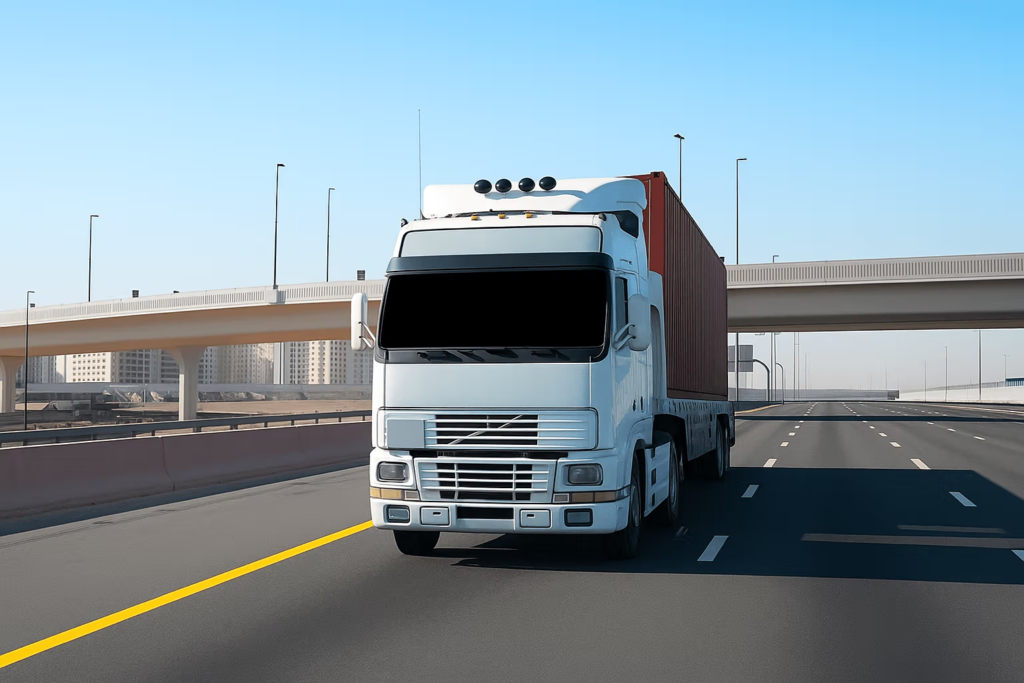
Dubai’s Roads and Transport Authority (RTA) has approved a detailed regulatory framework for the operation of autonomous heavy vehicles. The move represents a major step in the emirate’s Smart Self-Driving Transport Strategy and supports Dubai’s long-term vision of becoming a global leader in advanced mobility.
As part of the first rollout, five pilot routes have been identified. These include Jebel Ali Port, Al Maktoum International Airport, Jebel Ali Port Rail Freight Terminal, Dubai Investments Park, and Ibn Battuta Mall. Each location has been selected for its strategic importance in logistics and urban movement, making them ideal testing grounds.
for the Future Framework
The new framework establishes licensing requirements, safety protocols, and technology standards for autonomous heavy vehicles. By setting out transparent rules, the RTA aims to create an environment that encourages innovation while ensuring safety and accountability on Dubai’s roads.
Initial operations will begin with supervised test runs. In some cases, safety drivers will remain in the vehicles, while on other routes will gradually transition towards fully driverless operation.
Supporting Dubai’s Logistics and Green Targets
The strategy is closely aligned with Dubai’s Commercial & Logistics Land Transport Strategy 2030. Through the adoption of autonomous heavy vehicles, the emirate aims to:
- Increase the sector’s contribution to Dubai’s economy to AED 16.8 billion by 2030
- Cut carbon emissions from logistics operations by 30 percent
- Enhance road safety and reduce incidents caused by human error
- Attract international investment by positioning Dubai as a testbed for mobility innovation
The shift to automation is expected to significantly reshape the logistics landscape, as over 61,000 heavy vehicles currently operate across the emirate.
Pilot Routes and Their Strategic Role
Each of the five selected pilot corridors highlights a different aspect of Dubai’s logistics ecosystem:
- Jebel Ali Port – A key hub for maritime freight and global trade.
- Al Maktoum International Airport – An essential gateway for air cargo.
- Jebel Ali Port Rail Freight Terminal – Vital for intermodal connections between rail and road.
- Dubai Investments Park – A major industrial and logistics zone.
- Ibn Battuta Mall – Represents a complex urban setting where logistics meets retail distribution.
These routes will serve as real-world test beds, allowing authorities to evaluate how autonomous heavy vehicles perform under diverse operational environments.
Transforming the Logistics Sector
The adoption of autonomous heavy vehicles is expected to reduce operational costs, improve delivery efficiency, and minimise downtime. For logistics operators, the shift could open new opportunities to expand services and adopt smarter fleet management systems.
At the same time, the initiative supports Dubai’s wider goals of developing a sustainable economy, reducing traffic congestion, and maintaining its competitive edge as a global logistics hub.
Challenges and Considerations
While the framework marks a strong beginning, several factors will influence its success:
- Ensuring safety for all road users in varied traffic conditions
- Establishing clear accountability in the event of incidents
- Building supporting infrastructure for seamless operations
- Gaining community confidence in the reliability of driverless transport
These challenges will be addressed progressively as the pilot routes become operational and data is gathered from live trials.
for Dubai’s Autonomous Vision
The RTA has outlined a phased approach. The initial stage focused on setting standards, legal frameworks, and safety requirements. The second phase, now underway, involves live testing across the selected corridors.
As the system matures, more routes are expected to join the network, eventually leading to wider adoption of driverless heavy transport across Dubai.
Dubai’s decision to regulate and pilot autonomous heavy vehicles is a forward-looking move that strengthens its position as a global hub for innovation. By balancing safety, efficiency, and sustainability, the emirate is setting the stage for a logistics sector that is smarter, greener, and more resilient.
Residents and businesses alike will witness the transformation of goods movement, with ripple effects on trade, retail, and urban life. The journey towards automation has begun, and Dubai is once again at the forefront of mobility innovation.
Read More:
- Saudi Arabia to Launch Autonomous Air Taxi Flights This Year – Social Kandura
- Afrobeats superstar returns to Dubai with his biggest show yet – Social Kandura
For more updates on local news and things to do in Dubai and the UAE, follow Social Kandura.