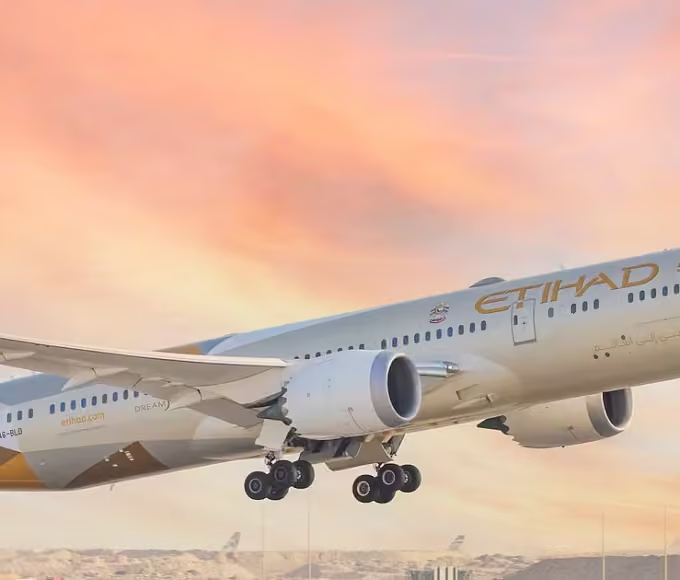

Ten of the largest airlines in the Gulf Cooperation Council (GCC) are scheduled to receive 781 new aircraft by the end of 2029, according to Alpen Capital’s GCC Aviation Industry Report 2026. Emirates, Etihad Airways, Qatar Airways, Air Arabia and flydubai are among the airlines driving this expansion. The investment is expected to support growing passenger demand, tourism, cargo operations and regional connectivity, while creating opportunities for the UAE’s aviation and aircraft maintenance sectors.
- Location: UAE and wider GCC region
- Organisation: Alpen Capital
- Status: 781 aircraft scheduled for delivery by the end of 2029
- Who is affected: Airlines, passengers, airports and aviation businesses
- Business impact: Fleet expansion, airport infrastructure, cargo and aircraft maintenance
- What’s next: New aircraft deliveries alongside continued investment in aviation infrastructure
GCC airlines have 781 new aircraft on order for delivery by the end of 2029, as the region prepares for another phase of aviation growth. According to Alpen Capital’s GCC Aviation Industry Report 2026, six major full-service airlines account for 486 aircraft, while four leading low-cost carriers have ordered another 295.
The UAE plays a significant role in this expansion, with Emirates, Etihad Airways, Air Arabia and flydubai contributing to the region’s growing aircraft order book. The investment comes as passenger numbers approach 400 million annually across the GCC, increasing demand for flights, airport capacity and supporting aviation services.
Emirates, Qatar Airways and Etihad Lead Full-Service Airline Orders
Emirates accounts for the largest share of aircraft orders among the GCC’s six leading full-service airlines, representing 41.2% of their combined order book. Qatar Airways follows with 23%, while Etihad Airways accounts for 20.6%.
Together, the three airlines represent 84.8% of the full-service carriers’ aircraft orders.
Emirates is continuing its long-term fleet renewal programme with investments in new-generation aircraft. Its 2025–26 annual report listed 367 aircraft in its overall order book as of March 31, 2026. The airline’s orders include Airbus A350s and Boeing 777Xs, alongside other aircraft types.
Qatar Airways is also preparing for a significant fleet expansion. In May 2025, the airline announced an order for 210 Boeing widebody aircraft, including 130 Boeing 787s and 30 Boeing 777-9s, with additional options.
Etihad Airways is expanding its fleet to support its growing international network. The airline indicated in September 2026 that it expected to receive around 20 aircraft annually as part of its expansion plans.
These investments reflect the growing importance of international connectivity, particularly through major GCC aviation hubs.
Air Arabia and flydubai Drive Low-Cost Carrier Expansion
Low-cost airlines are also increasing their aircraft orders as more travellers look for affordable connections across the Gulf and beyond.
According to Alpen Capital, Air Arabia, flydubai, flynas and flyadeal have a combined order book of 295 aircraft scheduled for delivery by the end of 2029.
Air Arabia accounts for 38.6% of these orders, narrowly ahead of flydubai at 38.3%.
Air Arabia continues to expand its regional network and fleet. The Sharjah-based airline has an existing order for 120 Airbus A320-family aircraft, supporting its plans to increase capacity and serve more destinations.
Meanwhile, flydubai is expanding its Boeing 737 MAX fleet. The airline announced plans for 11 additional aircraft deliveries during 2026 and is also investing in aircraft maintenance facilities at Dubai South.
The growth of these carriers is important for travellers, as additional aircraft can support more routes, greater flight frequency and increased seat availability. However, actual changes to fares and ticket prices will depend on market demand, operating costs and competition.
GCC Passenger Numbers Approach 400 Million
Rising passenger demand is one of the main reasons behind the region’s aircraft expansion.
Alpen Capital reported that passenger traffic across GCC airlines increased from 318.1 million in 2019 to 373 million in 2024. The figure rose by another 5.2% in 2025, reaching 392.5 million passengers.
The UAE and Saudi Arabia accounted for a combined 276.4 million passengers in 2024, highlighting their importance to regional aviation.
The UAE also recorded 429.2 billion revenue passenger kilometres in 2024, the highest among GCC markets. Saudi Arabia reported the strongest growth in this measure between 2019 and 2024, with a compound annual growth rate of 6.4%.
Tourism is expected to support further growth. Alpen Capital forecasts international tourist arrivals across the GCC to reach approximately 95.2 million by 2030, growing at an annual rate of 4% from 2025.
Dubai is already seeing the impact of increased travel demand. Dubai International Airport welcomed a record 95.2 million guests in 2025, according to Dubai Airports. The airport also recorded 454,800 flight movements during the year.
These figures underline the importance of airport capacity and airline investment as the UAE continues to attract international visitors.
UAE’s Aviation Maintenance Sector Gains Importance
The expansion is also creating opportunities beyond passenger flights. Aircraft maintenance, repair and overhaul (MRO), air cargo and aviation technology are becoming increasingly important as airlines add more aircraft to their fleets.
Alpen Capital’s report estimates that the Middle East MRO market reached US$16.2 billion in 2025, representing 29.6% growth compared with the previous year.
The UAE accounted for approximately 45% of the regional MRO market in 2024, valued at US$5.6 billion. Qatar followed with US$2.4 billion, while Saudi Arabia represented US$2 billion.
Dubai is also strengthening its position in this sector through investments in aviation facilities. flydubai’s planned maintenance centre at Dubai South is one example of how the airline’s expansion is supporting investment in supporting infrastructure.
Air cargo remains another important part of the industry. Dubai International Airport and Hamad International Airport together handled approximately 65% of Middle East air cargo volumes, according to Alpen Capital.
Rising Costs and Regional Uncertainty Remain Challenges
Despite the positive growth outlook, the GCC aviation industry faces several challenges.
Alpen Capital has highlighted geopolitical uncertainty, airspace restrictions and rising fuel costs as factors putting pressure on airline operations. Changes to flight routes can increase operating expenses and affect passenger and cargo movements.
Growing competition is another concern. As established airlines expand and new carriers enter the market, the region could face potential overcapacity if aircraft deliveries outpace passenger demand.
The industry also needs more skilled professionals, particularly pilots and technical engineers, to support its growing fleet and airport infrastructure.
Alpen Capital expects continued investment in technology, airport facilities, workforce training and sustainable aviation to support the industry’s longer-term development.
The GCC’s aircraft expansion could bring several changes to the UAE’s travel and business sectors.
For passengers, larger airline fleets could support more flight options, additional destinations and increased frequencies. This may benefit residents travelling for holidays, business or family visits.
Tourism businesses, hotels, airport operators and cargo companies could also benefit from higher passenger and freight activity.
The expansion is equally important for the UAE’s aviation workforce. Aircraft maintenance, engineering, airport operations and technical services could see further demand as airlines introduce new aircraft.
However, the number of aircraft ordered does not automatically mean cheaper tickets or immediate new routes. These changes will depend on airline schedules, market demand and operating conditions.
FAQs
How many new aircraft have GCC airlines ordered by 2029?
Ten leading GCC airlines have a combined order book of 781 aircraft scheduled for delivery by the end of 2029, according to Alpen Capital’s 2026 report.
Which GCC airline has the most aircraft orders?
Emirates has the largest share among the six leading full-service airlines, accounting for 41.2% of their combined aircraft orders.
How many aircraft have Air Arabia and flydubai ordered?
Air Arabia accounts for 38.6% and flydubai 38.3% of the combined order book of the four leading GCC low-cost carriers. Together, they represent 76.9% of those orders.
How many passengers travelled across GCC airlines in 2025?
GCC airlines carried approximately 392.5 million passengers in 2025, marking a 5.2% increase from 2024.
Will the new aircraft mean cheaper flight tickets?
Not necessarily. Additional aircraft could increase seat availability and competition, but ticket prices will continue to depend on demand, fuel costs, operating expenses and airline pricing strategies.
The planned delivery of 781 aircraft by 2029 highlights the scale of investment taking place across the GCC aviation industry. With Emirates, Etihad Airways, Air Arabia and flydubai playing important roles, the UAE is set to remain a major part of this expansion. Passenger demand, tourism growth and investment in airport and maintenance infrastructure will influence how the industry develops over the coming years.
Follow Social Kandura for more updates on local news and things to do in Dubai and across the UAE.
Read More
- Air Arabia
- Air Arabia fleet expansion
- Airlines
- dubai
- Dubai airlines
- emirates
- Emirates fleet expansion
- Etihad aircraft orders
- flydubai
- GCC Airlines
- GCC Airlines to Receive 781 New Aircraft
- GCC aviation growth
- Gulf airlines
- Middle East Aviation
- new aircraft deliveries 2029
- Qatar Airways
- Social Kandura
- Social Kandura Media
- Social Kandura Media News
- travel
- UAE