

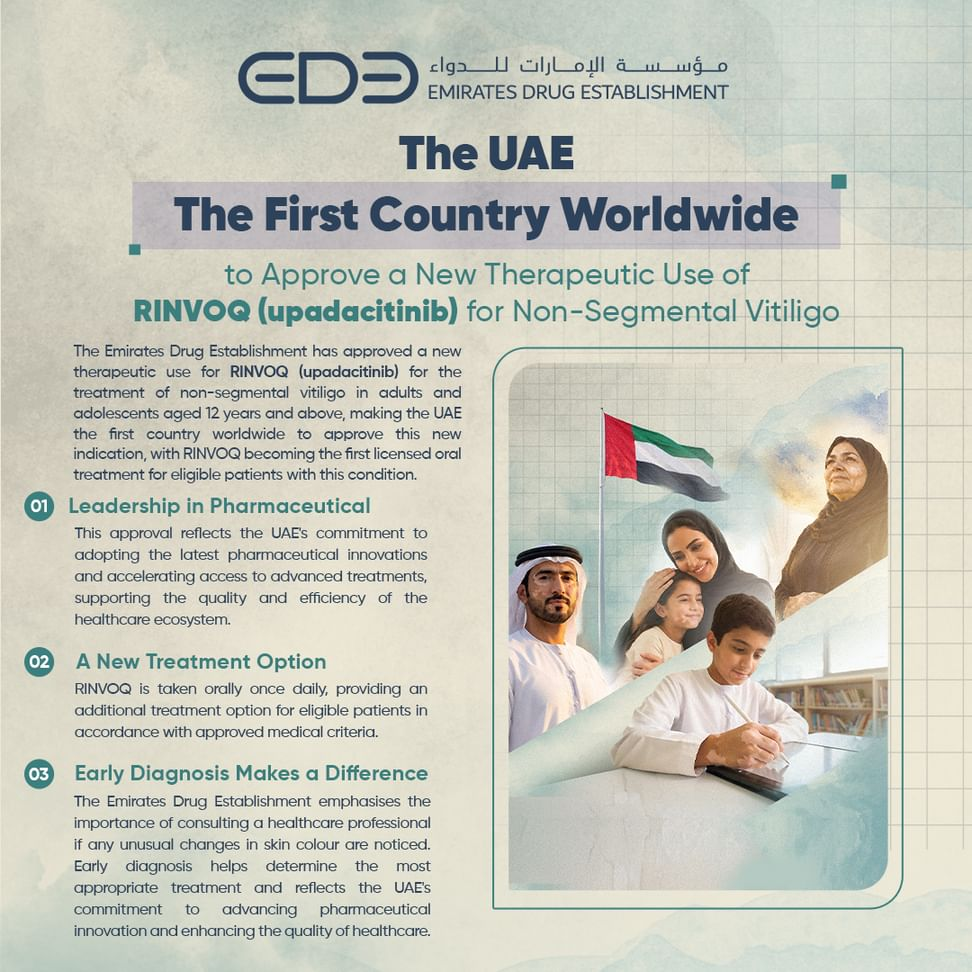
The UAE has approved a new use of RINVOQ (upadacitinib) for non-segmental vitiligo, making it the first country to license an oral treatment for this specific patient group, according to the Emirates Drug Establishment (EDE). The approval applies to adults and adolescents aged 12 years and older whose condition requires systemic therapy. The once-daily medicine gives eligible patients another treatment option for managing vitiligo.
- Location: UAE
- Organisation: Emirates Drug Establishment (EDE)
- Status: New therapeutic indication approved on August 17, 2026
- Treatment: RINVOQ (upadacitinib), taken once daily
- Who is affected: Adults and adolescents aged 12+ with non-segmental vitiligo who require systemic therapy
- What’s next: Eligible patients can discuss the treatment with a specialist based on their individual medical condition
The UAE has approved RINVOQ (upadacitinib) for non-segmental vitiligo, becoming the first country to license an oral treatment for adults and adolescents aged 12 and above in this treatment group. The Emirates Drug Establishment announced the approval on August 17, 2026.
The medicine is intended for patients whose non-segmental vitiligo requires systemic treatment, meaning medication that works through the bloodstream rather than only being applied to the skin. The decision adds another option for patients managing a chronic autoimmune skin condition that can cause widespread loss of skin colour.
What has the UAE approved for vitiligo?
The Emirates Drug Establishment has approved a new therapeutic indication for RINVOQ, also known by its generic name upadacitinib.
The approval covers non-segmental vitiligo in adults and adolescents aged 12 years and older who are candidates for systemic therapy. According to EDE, this makes RINVOQ the first licensed oral treatment for this particular patient group.
RINVOQ is a Janus kinase (JAK) inhibitor. It works by modifying immune-system activity and was already approved for several other inflammatory conditions before its use was expanded to vitiligo.
The treatment is taken orally once a day. However, the approval does not mean that every person with vitiligo is automatically eligible. Doctors will assess the extent and type of the condition before deciding whether systemic treatment is appropriate.
How effective was RINVOQ in clinical trials?
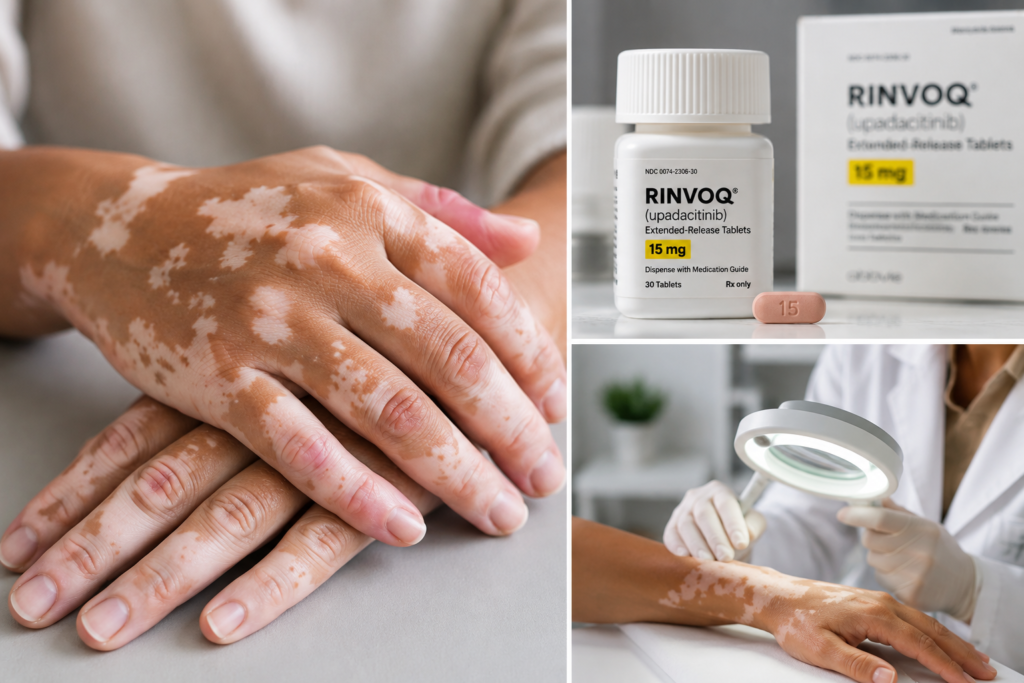
The UAE approval follows clinical research that evaluated upadacitinib in people with non-segmental vitiligo.
AbbVie, the manufacturer of RINVOQ, reported positive results from two Phase 3 Viti-Up studies involving 614 participants across 90 sites worldwide. Participants received either 15mg of upadacitinib once daily or a placebo.
After 48 weeks, researchers reported improvements in repigmentation of both the face and total body area.
In the two studies, 19.4% and 21.5% of patients receiving upadacitinib achieved at least a 50% reduction in total vitiligo area, compared with 5.9% in both placebo groups.
Facial repigmentation also improved. The studies found that 25.2% and 23.4% of patients receiving the medicine achieved the specified F-VASI 75 measure, compared with 5.9% and 6.9% in the respective placebo groups.
The company said the safety findings were consistent with the established safety profile of upadacitinib, with no new safety signals identified in the Phase 3 trials.
What is the difference between non-segmental and segmental vitiligo?
The new UAE approval specifically concerns non-segmental vitiligo, which is the most common form of the condition.
Non-segmental vitiligo typically affects both sides of the body. White or lighter patches can appear on areas such as the face, hands, neck and other parts of the body. The condition can gradually spread over time.
Segmental vitiligo follows a different pattern. It usually affects one side or a particular area of the body and often begins earlier in life. It can become stable after a period of progression.
The distinction is important because the UAE approval for RINVOQ does not cover every type of vitiligo.
Why does the new UAE approval matter?
For eligible patients, the approval provides an oral systemic treatment option for non-segmental vitiligo.
Vitiligo is generally considered an autoimmune condition in which the immune system attacks melanocytes, the cells responsible for producing skin pigment. Treatment can vary depending on the extent of the condition, its location and how quickly it is progressing.
The EDE said the approval reflects the UAE’s regulatory approach to adopting pharmaceutical developments and improving patient access to newer treatments.
The decision also adds to the country’s growing role in healthcare and pharmaceutical regulation. The UAE has been working to strengthen its regulatory systems and speed up access to innovative medicines while maintaining requirements for safety and efficacy.
What should UAE residents know about the treatment?
The approval is not a recommendation for people to self-medicate or seek RINVOQ without medical advice.
EDE has advised people who notice unusual changes in skin colour to consult a specialist. Early assessment can help determine whether the changes are caused by vitiligo and which treatment approach is suitable.
Because RINVOQ is a prescription medicine that affects the immune system, a doctor must assess whether its benefits outweigh potential risks for an individual patient.
Patients should also confirm availability, prescribing requirements and eligibility with their healthcare provider in the UAE.
The UAE’s approval gives eligible adults and adolescents with non-segmental vitiligo access to a new oral treatment option.
For patients who require systemic therapy, the development could provide an alternative to treatment approaches that rely mainly on topical medicines or other therapies. It also strengthens the UAE’s position as an early adopter of newly approved pharmaceutical treatments.
The next step for patients is a consultation with a qualified specialist. Doctors will determine whether the treatment is appropriate based on the patient’s age, type of vitiligo, disease severity and overall health.
FAQs
Is RINVOQ now approved for vitiligo in the UAE?
Yes. The Emirates Drug Establishment has approved a new therapeutic indication for RINVOQ (upadacitinib) for non-segmental vitiligo in eligible adults and adolescents aged 12 years and above.
Is RINVOQ a pill for vitiligo?
Yes. RINVOQ is an oral medicine taken once daily. The UAE approval covers patients whose non-segmental vitiligo requires systemic therapy.
Can all people with vitiligo take RINVOQ?
No. The approval applies to a specific patient group. A specialist must determine whether systemic treatment with RINVOQ is suitable for an individual patient.
What type of vitiligo does RINVOQ treat?
The UAE approval is for non-segmental vitiligo. It does not mean the medicine is approved for all forms of vitiligo.
Does the new approval mean patients can buy RINVOQ without a prescription?
No. RINVOQ is a prescription medicine. Patients should consult a qualified healthcare professional regarding eligibility, prescribing and availability.
The UAE’s approval of RINVOQ for eligible patients with non-segmental vitiligo marks a significant development in the country’s access to newer treatments. The once-daily oral medicine offers another systemic option for adults and adolescents aged 12 and above whose condition requires this type of therapy.
Patients should speak with a specialist before considering the treatment, as eligibility depends on individual medical circumstances.
Follow Social Kandura for more updates on local news and things to do in Dubai and across the UAE.
Read More