

Dubai’s Al Maktoum International Airport is set to get what is being described as the world’s largest airport automated people mover (APM) system. Dubai Aviation City Corporation (DACC) has awarded the contract to a consortium of Mitsubishi Heavy Industries, MHI Mobility Engineering Services and Larsen & Toubro. The planned network will stretch approximately 50km and connect nine stations, helping passengers move between terminals and major airport facilities as Dubai expands the airport into a global aviation hub.
- Location: Al Maktoum International Airport, Dubai South
- Organisation: Dubai Aviation City Corporation
- Project: Automated people mover system
- Network: Approximately 50km across nine stations
- Fleet: 165 automated vehicles
- Target completion: December 2031
- Who is affected: Future passengers, airport workers, airlines and airport operators
- Business impact: Supports the expansion of Dubai’s largest planned aviation hub
- What’s next: Construction, system integration, testing and commissioning
Dubai is preparing to build a 50km automated people mover system at Al Maktoum International Airport, making it the largest airport transit system of its kind by planned network length. Dubai Aviation City Corporation awarded the contract to a consortium comprising Mitsubishi Heavy Industries (MHI), its Dubai-based subsidiary MHI Mobility Engineering Services and Larsen & Toubro (L&T).
The system will connect nine stations and is designed to move passengers efficiently between airport terminals and major facilities. The project is scheduled for completion in December 2031 and forms part of Dubai’s wider plan to develop Al Maktoum International into one of the world’s largest airports.
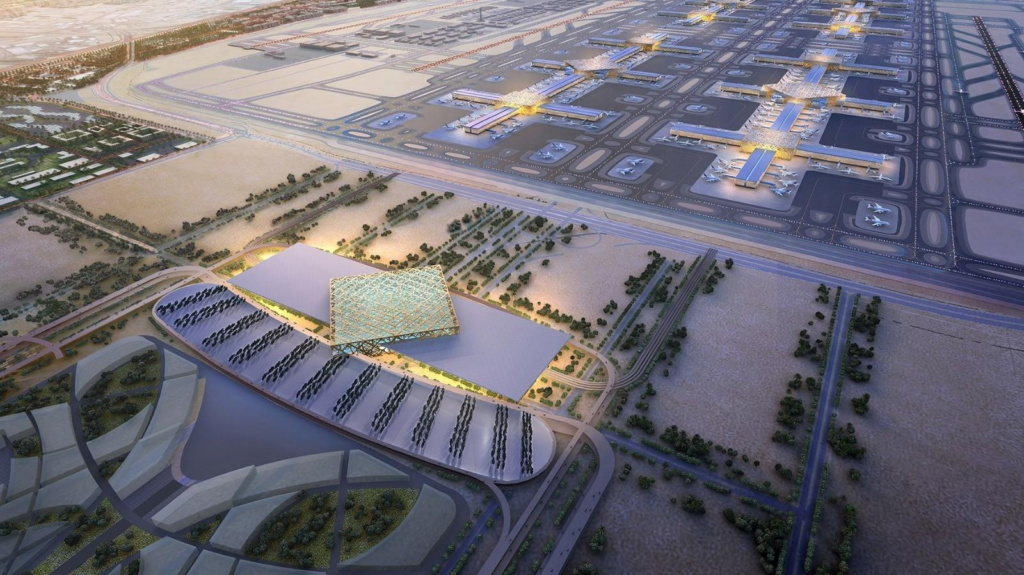
Why is Al Maktoum Airport getting a 50km people mover?
The scale of the automated people mover reflects the size of the airport Dubai is planning.
Al Maktoum International Airport is being developed in phases, with Dubai targeting long-term capacity of more than 260 million passengers a year. The airport’s expansion was approved with an estimated investment of Dh128 billion, according to Dubai Media Office.
The future airport is planned to include multiple terminals, concourses, runways and aircraft stands. With such a large footprint, passengers will need an efficient way to travel between different parts of the complex.
The APM will provide that internal connection without relying on conventional road transfers across the airport.
Dubai Aviation Engineering Projects has also outlined a broader future APM vision for the airport, including a planned 14-station system as development progresses.
How big will Dubai’s new airport transit system be?
The first-phase APM network will cover approximately 50km and nine stations, according to the contract announcement.
That would put it well ahead of existing airport people movers in terms of network length.
For comparison, Dallas Fort Worth International Airport’s Skylink system in the US operates across roughly 10 miles of track. Atlanta’s Plane Train is another major airport automated people mover, serving one of the world’s busiest airports.
Dubai’s planned network will therefore be built on a significantly larger scale.
The system will use 165 automated vehicles. MHI and MHI-MESC will be responsible for the design, procurement and testing of the vehicles and signalling technology, as well as overall system integration.
L&T will handle the design, procurement, testing and construction of the remaining subsystems on site.
When will the Al Maktoum Airport people mover be completed?
The APM system is scheduled for completion in December 2031.
The project is being delivered alongside the wider development of Al Maktoum International Airport, which is expected to become a major part of Dubai’s aviation infrastructure in the early 2030s.
The timeline is important because the airport itself is being developed in stages. Dubai’s long-term plan is not simply about adding another passenger terminal. It is designed to create a large-scale aviation hub capable of handling substantially more passengers and aircraft than the emirate’s existing infrastructure.
The APM will therefore need to be ready as the airport’s passenger facilities and supporting infrastructure come into operation.
What will the people mover mean for passengers?
For future travellers, the biggest benefit should be easier movement across the airport.
Large airports can involve considerable distances between check-in areas, departure gates, immigration facilities, baggage areas and other passenger services. An automated transit system can reduce the need for long walks or road-based transfers.
The nine planned stations will connect key areas of the first phase, helping create a more integrated passenger journey.
The network is also expected to support airport staff and daily operations. As passenger numbers grow, reliable movement between facilities becomes increasingly important for airlines, ground handlers and other airport businesses.
The system is automated, meaning it is designed to operate without conventional drivers while using dedicated signalling and control technology.
How does this fit into Dubai’s bigger airport expansion?
The APM is only one part of the much larger Al Maktoum International project.
Dubai Media Office has described the expanded airport as a future global aviation hub with five parallel runways, two passenger terminals, seven concourses and more than 430 aircraft stands under the current development plans.
The airport’s ultimate passenger capacity is expected to exceed 260 million passengers annually.
That expansion is closely linked to Dubai’s wider economic strategy. Aviation supports tourism, trade, logistics, hospitality and international business, while the airport’s location in Dubai South places it within a broader development zone that includes logistics and commercial infrastructure.
For airlines and aviation businesses, the larger airport is intended to provide additional capacity as regional and international travel demand continues to grow.
Why It Matters?
For UAE residents, the new APM is another sign of how dramatically Dubai’s airport infrastructure is set to change over the next decade.
Future passengers could benefit from faster and more convenient movement across a much larger airport. Airlines and airport operators will gain infrastructure designed to support higher passenger volumes, while Dubai’s tourism and business sectors could benefit from additional international connectivity.
The project also creates opportunities for engineering, construction, technology and airport-services companies involved in the wider development.
For now, the immediate next step is the delivery of the APM infrastructure, including vehicle systems, signalling, stations and supporting subsystems. Completion is targeted for December 2031.
FAQs
What is the Al Maktoum International Airport automated people mover?
It is an automated airport transit system designed to transport passengers between terminals and major facilities at Al Maktoum International Airport. The first-phase network will cover approximately 50km and connect nine stations.
Who is building the Al Maktoum Airport people mover?
Dubai Aviation City Corporation awarded the contract to a consortium comprising Mitsubishi Heavy Industries, MHI Mobility Engineering Services and Larsen & Toubro.
How long will the Al Maktoum Airport APM system be?
The first-phase system will span approximately 50km, making it significantly larger than existing airport people mover systems such as Dallas Fort Worth’s Skylink.
When will the Al Maktoum Airport people mover be completed?
The contract sets a target completion date of December 2031.
How many passengers will Al Maktoum International Airport eventually handle?
Dubai’s long-term plans target capacity for more than 260 million passengers annually once the airport is fully developed.
The planned 50km automated people mover is a major piece of Al Maktoum International Airport’s future transport infrastructure. With nine stations and 165 automated vehicles, the system is being designed to handle the scale of Dubai’s next-generation aviation hub.
As construction progresses towards the December 2031 completion target, the APM will become an important part of how passengers and airport operations move across the expanded facility.
Follow Social Kandura for more updates on local news and things to do in Dubai and across the UAE.
Read More