
Riyadh launches self-driving delivery vehicles in Saudi Arabia
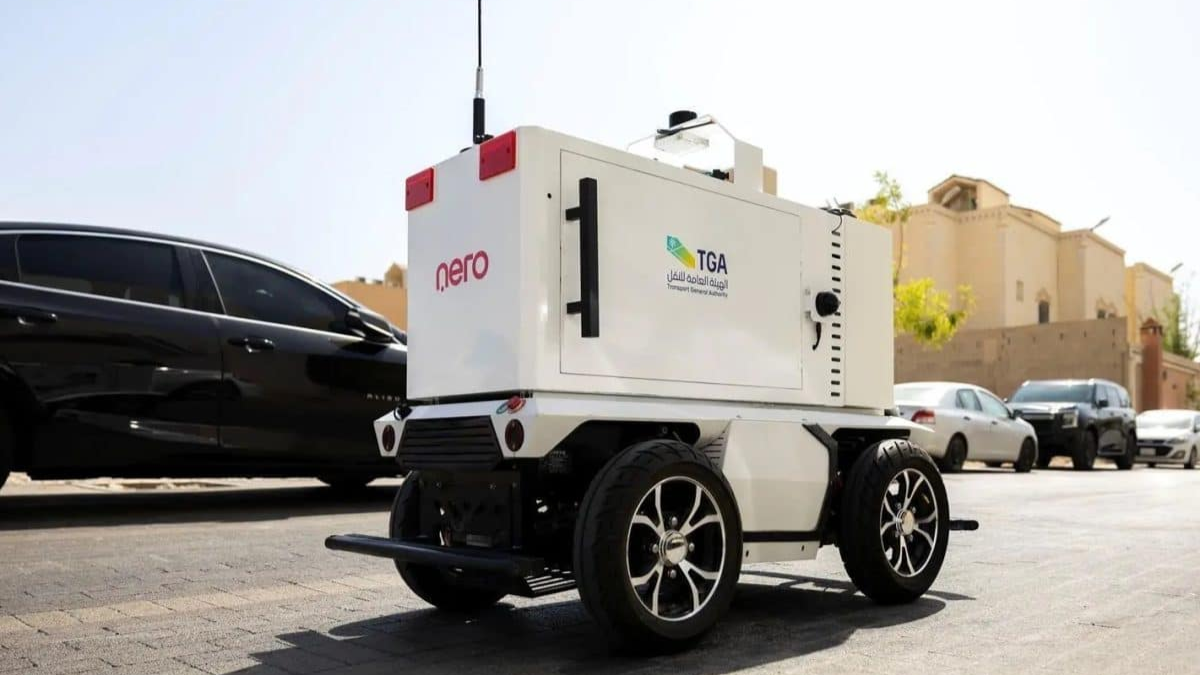
What happened? Saudi Arabia’s Transport General Authority (TGA) has launched Riyadh’s first operational model for self-driving last-mile delivery.
Who is affected? The pilot currently covers a defined area in Al-Falah district, with delivery customers using electronic ordering and autonomous vehicles handling the final leg.
Why does it matter? TGA says the electric vehicles could eventually help cut delivery costs by up to 85%, while supporting cleaner and quieter urban logistics.
- Location: Al-Falah district, Riyadh
- Organisation: Saudi Arabia’s Transport General Authority
- Status: Pilot currently operational
- Who is affected: Customers and delivery operators within the designated pilot area
- Business impact: TGA is targeting delivery cost reductions of up to 85%
- What’s next: Gradual expansion of the service in future phases
Riyadh has launched a self-driving delivery vehicle pilot as Saudi Arabia tests autonomous technology for last-mile logistics. The Transport General Authority (TGA) said the project is operating within a designated area of Al-Falah district, where electric autonomous vehicles transport customer orders to their final destinations.
The vehicles use Level 4 autonomous driving technology and are monitored remotely in real time. TGA says the project aims to reduce delivery costs by as much as 85%, while also supporting lower emissions and less street noise.
How will Riyadh’s self-driving delivery service work?
The process starts when a customer places an order electronically. Once the order is ready, it is loaded into an autonomous vehicle, which then travels independently to the recipient.
The vehicles are equipped with 360-degree sensor coverage to monitor their surroundings. Their operations are also supervised from a remote operations centre, allowing staff to track activity in real time.
TGA has also said the vehicles can be stopped immediately in an emergency, adding a remote safety layer to the autonomous delivery system.
The pilot is currently limited to a defined geographic area rather than covering Riyadh as a whole. TGA has not announced the number of vehicles participating in the project.
?????? ?????? ????? ???? ??? ????? ???????? ????? ??????? ?? #?????? https://t.co/NLHO6A5CTI
— ??? ?????? (@QblQlel) October 4, 2026
Why is Saudi Arabia testing Level 4 autonomous vehicles?
Level 4 autonomous driving is being used by TGA as the technology classification for the vehicles involved in this pilot. It allows the vehicle to perform the driving task within the conditions and area for which the system is designed, rather than requiring a person to control every part of the journey.
For Saudi Arabia, the project is part of a wider push to introduce advanced technology into transport and logistics.
TGA said the initiative supports efforts to develop innovative transport solutions and improve the efficiency of the Kingdom’s logistics sector.
The project also has a local development angle. According to TGA, the initiative supports local vehicle manufacturing and could create specialised opportunities for Saudi nationals in areas such as engineering, technology and remote operations.
Could self-driving vehicles reduce delivery costs in Saudi Arabia?
TGA is targeting up to 85% lower delivery costs through the use of its electric autonomous fleet. However, this figure is a target rather than a saving already achieved by the pilot.
Last-mile delivery is one of the more operationally demanding parts of e-commerce and logistics. Delivering individual orders to different addresses can require significant driver time, fuel and fleet resources.
Autonomous vehicles could change that model if the technology can operate safely and efficiently at scale. For businesses, potential savings could eventually affect delivery operations, fleet management and the cost of serving customers.
The current pilot will provide an opportunity to test how the technology performs in a real urban environment before any wider rollout.
Is this Saudi Arabia’s first autonomous delivery project?
Not entirely. Saudi Arabia has already tested autonomous delivery technology in earlier projects.
In July 2025, TGA announced an autonomous delivery pilot developed through a partnership between Jahez and ROSHN Group at ROSHN Business Front. That initiative was aimed at testing smart and sustainable delivery solutions.
The latest Riyadh project represents a further step, with TGA describing it as the first operational model for autonomous last-mile delivery in Riyadh.
The authority has also linked the project to ideas developed through its Transport Hackathon, showing how an innovation concept moved towards practical testing.
This development fits into Saudi Arabia’s broader Vision 2030 ambitions for technology-driven logistics, smarter infrastructure and stronger transport connectivity. The Kingdom has been investing in logistics hubs and digital technologies as it works to strengthen its position as a global logistics centre.
What does Riyadh’s autonomous delivery pilot mean for the UAE?
The development is relevant to the UAE because Dubai and Abu Dhabi are also investing heavily in autonomous mobility, artificial intelligence and smart logistics.
For UAE businesses, Saudi Arabia’s pilot offers another example of how autonomous technology is moving beyond passenger transport and into everyday commercial deliveries.
The technology could eventually become useful for sectors such as e-commerce, food delivery, retail and logistics, particularly for controlled delivery zones and planned routes.
For customers, the biggest potential changes would be faster and more automated fulfilment, while businesses could benefit from lower operating costs if autonomous fleets prove commercially viable.
However, the Riyadh pilot is still at an early stage. Its performance, safety record and operating costs will need to be assessed before the model can be expanded significantly.
Riyadh’s autonomous delivery pilot shows how Saudi Arabia is testing self-driving technology in a practical, everyday logistics setting.
UAE residents and businesses should pay attention because similar technologies could increasingly become part of GCC delivery networks. The potential benefits include lower operating costs, quieter electric fleets and reduced emissions during operation.
For now, the Riyadh service remains limited to Al-Falah district. TGA has said the model will be expanded gradually in future phases, but it has not provided a specific date for a wider rollout.
FAQs
Where has Riyadh launched the self-driving delivery pilot?
The pilot is operating within a designated geographic area in Al-Falah district in Riyadh.
What technology do the delivery vehicles use?
The vehicles use Level 4 autonomous driving technology and have 360-degree sensor coverage. Their operations are monitored remotely in real time.
How much could autonomous deliveries reduce costs?
TGA is targeting delivery cost reductions of up to 85% through the electric autonomous fleet. This is a target and not a saving already achieved by the pilot.
Are the self-driving delivery vehicles electric?
Yes. TGA says the vehicles are electric and produce zero carbon emissions during operation. The authority also expects them to help reduce street noise.
Will the service expand across Riyadh?
TGA has said the autonomous delivery model will be expanded gradually in future phases. However, no specific timetable or wider coverage area has been announced yet.
Riyadh’s new autonomous delivery pilot marks another step in Saudi Arabia’s push to bring self-driving technology into commercial logistics. With Level 4 vehicles, remote monitoring and an ambitious 85% cost-reduction target, the project will be closely watched as the Kingdom explores the future of last-mile delivery.
Follow Social Kandura for more updates on local news and things to do in Dubai and across the UAE.
Read More