

What happened?
Dubai’s RTA has approved a five-year Soft Mobility Plan that will expand pedestrian and cycling infrastructure across the emirate.
Who is affected?
Residents, commuters, cyclists, e-scooter users, visitors and daily Metro and bus passengers.
Why does it matter?
The initiative will make walking and cycling safer, improve access to public transport and support Dubai’s long-term sustainable mobility goals under the Dubai 2040 Urban Master Plan.
Getting around Dubai without relying on a private car could soon become much easier. The Roads and Transport Authority (RTA) has approved a five-year Soft Mobility Plan that will improve walking, cycling and e-scooter infrastructure across the emirate by 2030. The initiative will connect 25 residential communities and upgrade the surroundings of 63 Metro and bus stations, making first- and last-mile journeys safer and more convenient. The project is part of Dubai’s wider vision to build a more sustainable and connected transport network while supporting the goals of the Dubai 2040 Urban Master Plan.
How will Dubai’s new Soft Mobility Plan improve daily travel?
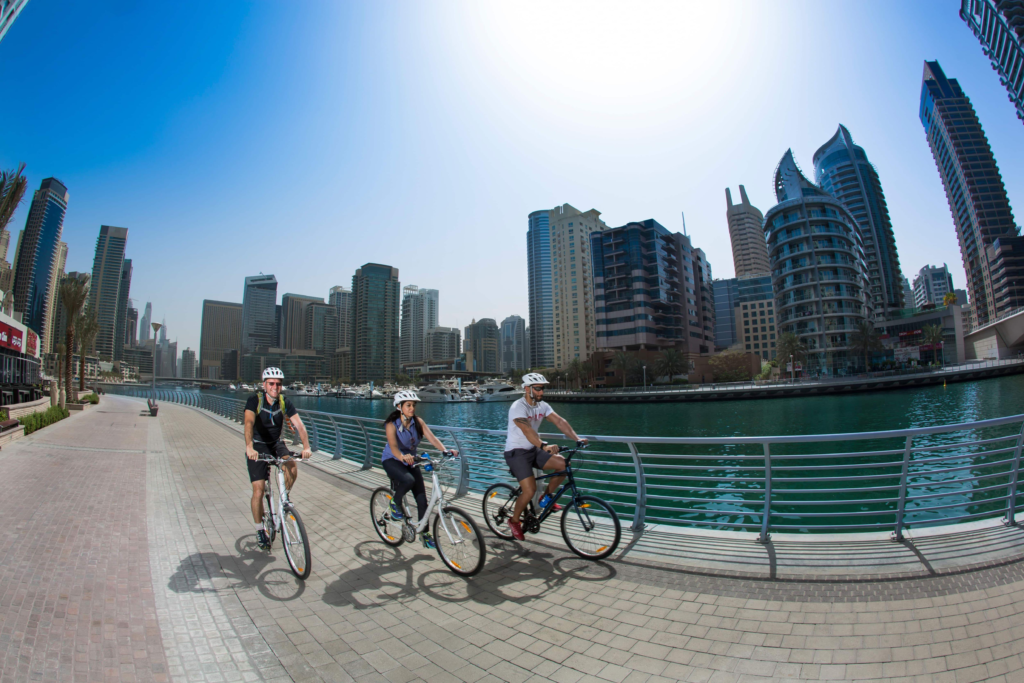
According to the RTA, the plan focuses on making it easier for residents to reach public transport without depending on private vehicles. The authority aims to create seamless links between neighbourhoods, Metro stations, bus stops and major destinations through dedicated pedestrian and cycling infrastructure.
The improvements will include:
- Dedicated cycling tracks
- Wider pedestrian walkways
- Shaded walking routes
- Safer pedestrian crossings
- Bicycle parking facilities
- Pick-up and drop-off zones
- Shared mobility stations for bicycles and e-scooters
- Improved accessibility for People of Determination
The goal is to encourage more people to walk, cycle or use shared mobility options for shorter journeys while making public transport more accessible.
Which areas are included in the expansion?
Work has already begun in several busy communities, including:
- Dubai Marina
- Naif
- Al Rigga
- Al Murar
- Al Muraqqabat
Under the new plan, RTA will expand the network to another 25 residential communities, increasing the total number of targeted areas to 34 by 2030.
The authority will also improve the surroundings of 63 Metro and bus stations with upgraded pedestrian routes, cycling facilities and integrated mobility services.
Area selection is based on several factors, including population density, public transport demand, land use, existing infrastructure, and future urban development plans.
Why is Dubai investing more in walking and cycling?
The latest figures from RTA show that residents are increasingly choosing alternative ways to travel.
During 2025, Dubai recorded:
- 342 million pedestrian journeys
- 57.3 million cycling trips
- 39.6 million e-scooter trips
These numbers reflect the growing demand for safer and more convenient alternatives to driving, particularly for short-distance travel.
According to Mattar Al Tayer, Director General and Chairman of the Board of Executive Directors of RTA, transport planning is evolving worldwide from simply building roads to creating seamless journeys that connect multiple transport modes.
Dubai already operates one of the region’s most integrated transport systems, combining Metro, buses, taxis, marine transport and shared mobility services. The latest expansion is expected to strengthen those connections even further.
How does the project support Dubai’s long-term vision?
The Soft Mobility Plan forms part of the Dubai 2040 Urban Master Plan, which focuses on creating sustainable, people-friendly communities.
The project is designed to:
- Reduce reliance on private vehicles
- Encourage environmentally friendly transport
- Improve accessibility across neighbourhoods
- Promote healthier lifestyles through walking and cycling
- Create better links between residential and commercial districts
Earlier this year, Sheikh Hamdan bin Mohammed bin Rashid Al Maktoum reviewed several RTA initiatives aimed at expanding smart mobility solutions, including advanced bicycle parking, charging facilities and integrated transport services. These projects complement the new Soft Mobility Plan and demonstrate Dubai’s continued investment in sustainable urban mobility.
Previous upgrades are already changing communities
The latest rollout builds on several completed projects across Dubai.
RTA has already upgraded walking and cycling infrastructure in areas including:
- Al Mankhool
- Al Qusais
- Al Karama
- Al Barsha 1
- Al Barsha 2
- Al Khawaneej 2
- Hor Al Anz
- Abu Hail
- Al Souk Al Kabeer
In addition, improvements have been completed around 37 Metro stations, including Mall of the Emirates, BurJuman, Burj Khalifa/Dubai Mall, Gold Souq, Sharaf DG, Baniyas Square, ONPASSIVE and Abu Hail stations.
These enhancements include dedicated pedestrian routes, mobility hubs and shared transport facilities that make journeys more convenient for commuters.
Why It Matters
Dubai’s latest mobility plan goes beyond building new walkways and cycling tracks. It is designed to make everyday travel easier, safer and more sustainable.
For residents, this means:
- Easier access to Metro and bus stations
- Safer walking and cycling routes
- Better first- and last-mile transport options
- Improved accessibility for People of Determination
- Reduced dependence on private cars
For businesses, improved connectivity can increase footfall around transport hubs and commercial districts while supporting Dubai’s broader sustainability and smart city ambitions.
As implementation continues through 2030, residents can expect more neighbourhoods to benefit from enhanced pedestrian infrastructure and integrated mobility services.
FAQs
What is Dubai’s Soft Mobility Plan?
It is RTA’s five-year strategy to expand walking, cycling and shared mobility infrastructure across Dubai while improving access to public transport.
How many communities will benefit?
The plan will expand soft mobility infrastructure across 25 additional residential communities, bringing the total number of targeted areas to 34 by 2030.
What improvements will residents see?
Residents can expect wider walkways, dedicated cycling tracks, shaded paths, bicycle parking, safer crossings, shared mobility stations and improved accessibility around Metro and bus stations.
Why is RTA investing in this project?
The initiative supports Dubai’s sustainability goals, encourages public transport use and reduces reliance on private vehicles while creating safer, more connected communities.
When will the project be completed?
The rollout will continue in phases and is scheduled for completion by 2030.
Dubai continues to invest in making everyday travel smarter, greener and more accessible. With new walkways, cycling tracks and improved connections to public transport planned across dozens of communities, the RTA’s Soft Mobility Plan represents another major step towards creating a more sustainable city. As the project progresses through 2030, residents can expect safer and more convenient ways to move around Dubai without relying solely on private vehicles.
Follow Social Kandura for more updates on local news and things to do in Dubai and across the UAE.
Read More