
What happened?
- Construction of Saudi Arabia’s Jeddah Tower is progressing again after officially restarting in 2025, with the project expected to surpass 1,000 metres in height.
Who is affected?
- The project is significant for Saudi Arabia’s construction, tourism and real estate sectors, while also attracting attention across the GCC, including the UAE.
Why does it matter?
- Beyond breaking height records, the tower is redefining skyscraper design by functioning as a self-contained vertical community with homes, offices, hotels and public spaces.
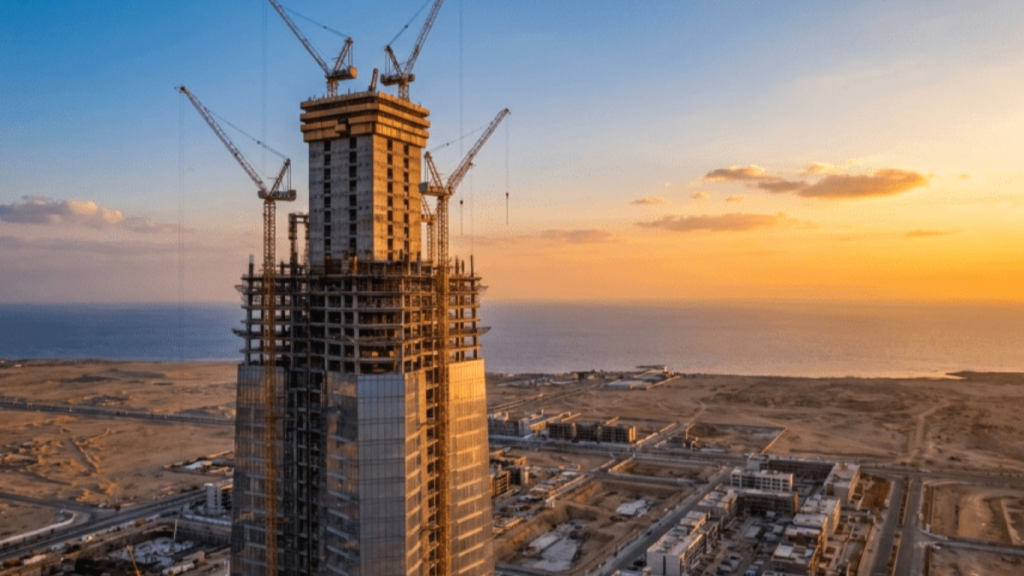
Saudi Arabia’s ambitious Jeddah Tower is once again climbing towards the sky after construction resumed in 2025, bringing the Kingdom closer to claiming the title of the world’s tallest building. Once completed, the tower is expected to rise above 1,000 metres, comfortably overtaking Dubai’s Burj Khalifa, which currently stands at 828 metres.
According to project owner Kingdom Holding Company, construction resumed under a new agreement with Saudi Binladin Group as part of the Kingdom’s wider Vision 2030 ambitions. But while the tower’s record-breaking height continues to grab headlines, engineers say the real innovation lies in how the building is designed to function—not simply as a skyscraper, but as a fully integrated “vertical city.”
Why is Jeddah Tower being called a ‘vertical city’?
Unlike traditional skyscrapers, where people simply travel between floors, Jeddah Tower is being planned as an entire mixed-use community stacked vertically.
Engineering experts, including representatives from global engineering firm AtkinsRéalis, say a building of this scale must operate much like a city. Instead of relying on a few lifts travelling from the ground to the top, the tower will use multiple elevator zones and transfer floors to move thousands of people efficiently throughout the day.
Residents, office workers, hotel guests and visitors will each have dedicated circulation systems, reducing waiting times and improving accessibility inside the building.
The development will combine luxury residences, office space, retail outlets, restaurants, a Four Seasons hotel and public observation areas within a single structure, creating a destination that remains active around the clock.
Construction is back on track after years of delays
Jeddah Tower has had one of the most closely watched construction journeys in the region.
The project was first announced more than a decade ago, with construction beginning in 2013. However, work came to a halt in 2018 before reaching its planned height due to a combination of financial, contractual and industry-related challenges.
In 2025, Kingdom Holding Company officially confirmed that construction had restarted after signing a SAR 7.2 billion agreement with Saudi Binladin Group to complete the project over the next several years.
Recent project updates indicate that construction has already progressed beyond the point where work originally stopped, with structural, façade and mechanical works continuing on site.
The tower remains the centrepiece of the much larger Jeddah Economic City master development.
Engineering a building taller than any before it
Building beyond one kilometre presents engineering challenges unlike those faced by conventional skyscrapers.
One of the biggest considerations is wind. At extreme heights, wind forces become significantly stronger, requiring architects to carefully shape the tower to minimize structural movement.
Jeddah Tower’s sleek, tapering triangular design has been developed specifically to reduce wind vortices, helping improve stability while enhancing occupant comfort.
Engineers must also deal with Saudi Arabia’s extreme climate. High-strength concrete needs to be pumped hundreds of metres into the air while maintaining its structural integrity. The completed tower must also safely expand and contract as temperatures change throughout the year.
Below ground, massive foundations are designed to support millions of tonnes of concrete and steel for decades while preventing uneven settlement.
These complex engineering solutions highlight why constructing a kilometre-high building requires years of planning before the structure even begins rising above ground.
A major project supporting Saudi Vision 2030
Jeddah Tower is more than an architectural landmark.
The project forms part of Jeddah Economic City, a mixed-use development covering approximately 5.3 million square metres that will include residential communities, commercial districts, hotels and leisure facilities.
Saudi officials have repeatedly linked the development to Vision 2030, the country’s long-term strategy to diversify the economy beyond oil by investing in tourism, infrastructure, business and global investment.
Once completed, the tower is expected to become a major international attraction, drawing tourists, investors and businesses while supporting employment and economic activity in Jeddah.
Its observation deck, luxury hospitality offerings and premium real estate are also expected to strengthen Saudi Arabia’s growing tourism sector.
How Jeddah Tower fits into Saudi Arabia’s Vision 2030?
For UAE residents, Jeddah Tower represents another milestone in the Gulf’s ongoing competition to deliver world-leading infrastructure and tourism projects.
Dubai has long been home to iconic developments such as Burj Khalifa, Palm Jumeirah and the Museum of the Future. Saudi Arabia is now investing heavily in projects including Jeddah Tower, NEOM, The Line and Diriyah as part of its transformation plans.
Rather than replacing Dubai’s appeal, these mega developments are expected to strengthen the GCC’s position as one of the world’s fastest-growing destinations for tourism, business and investment.
The region increasingly attracts travellers looking to experience multiple cities during a single trip, making landmark developments across neighbouring countries beneficial for regional tourism as a whole.
Key highlights
- Jeddah Tower is expected to exceed 1,000 metres, making it the world’s tallest building.
- Construction officially resumed in 2025 after several years on hold.
- The project is part of the 5.3 million sq m Jeddah Economic City development.
- The tower will include homes, offices, a luxury hotel, retail outlets and observation areas.
- Engineers describe the building as a “vertical city” because of its integrated transport systems and mixed-use design.
- The development supports Saudi Vision 2030 by boosting tourism, investment and economic diversification.
FAQs
How tall will Jeddah Tower be?
The tower is expected to exceed 1,000 metres, making it taller than Dubai’s Burj Khalifa.
Why was construction delayed?
Construction stopped in 2018 due to financial and contractual challenges before officially restarting in 2025.
Why is Jeddah Tower called a vertical city?
Because it combines residential, commercial, hospitality and leisure spaces within one building, supported by advanced elevator systems that function like an urban transport network.
Will Jeddah Tower become a tourist attraction?
Yes. The tower is expected to feature observation decks, luxury hospitality and public attractions that will attract visitors from around the world.
Is Jeddah Tower part of Vision 2030?
Yes. Saudi authorities have positioned the project as one of several major developments supporting the Kingdom’s Vision 2030 economic diversification strategy.
Jeddah Tower is aiming to do much more than set a new world record for height. As construction moves forward once again, the project is showcasing how the next generation of supertall buildings can operate as self-contained urban communities. With its mix of engineering innovation, tourism potential and economic significance, the development is set to become one of the Middle East’s most closely watched landmarks in the years ahead.
Follow Social Kandura for more updates on local news and things to do in Dubai and across the UAE.
Read More