

UAE mangroves are taking centre stage as the country strengthens its environmental goals. The UAE has announced plans to plant 100 million mangrove trees by 2030, while expanding protected natural areas to cover 19.04% of the nation. This move supports the broader Net Zero 2050 Strategy UAE and reflects a growing push towards climate resilience and biodiversity protection.
This isn’t just about planting trees. It’s about reshaping coastlines, protecting marine life, and building a long-term climate buffer for the country.
The real role of mangroves in protecting the UAE coastlines
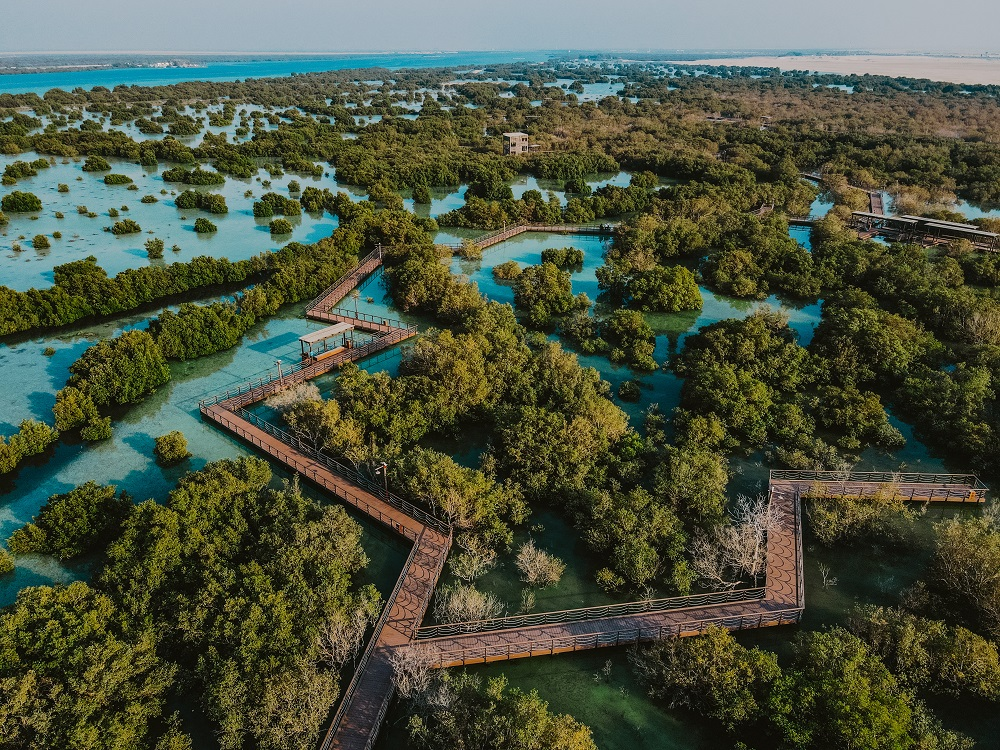
Mangroves are often overlooked, but in the UAE, they play a crucial role. These coastal trees act as natural barriers, protecting shorelines from erosion and rising sea levels. At the same time, they absorb carbon dioxide far more efficiently than many land forests.
In cities like Abu Dhabi and Dubai, mangrove ecosystems have already become a key part of urban sustainability planning. They support marine biodiversity, improve water quality, and create natural habitats for birds and fish.
For residents, they’ve also become popular outdoor spots. Kayaking through mangroves or walking along protected reserves is now part of weekend life for many.
Conservation efforts grow as protected zones reach 19%
Alongside mangrove planting, the UAE has increased its protected zones to cover 19.04% of the country’s total land area. This includes deserts, mountains, wetlands, and marine ecosystems.
These protected areas are not just symbolic. They are actively managed to conserve wildlife, restore ecosystems, and limit urban impact. From flamingo habitats to coral reefs, the diversity within these zones reflects the UAE’s broader environmental ambitions.
This also aligns with international conservation targets, positioning the UAE as a regional leader in sustainability.
The strategy behind the UAE’s large-scale mangrove planting
The goal to plant 100 million mangroves by 2030 is ambitious but already in motion. Government entities, environmental agencies, and community initiatives are all involved.
Planting efforts are focused on coastal regions where mangroves can thrive naturally. Advanced techniques, including drone seeding and nursery cultivation, are being used to scale the process efficiently.
There’s also a strong community angle. Schools, volunteers, and corporate groups are regularly invited to participate in planting drives, making this a nationwide effort rather than a top-down initiative.
The long-term benefits for UAE residents
For people living in the UAE, this shift is becoming more visible. Cleaner coastlines, more green spaces, and better air quality are all part of the long-term outcome.
Mangroves also support fisheries and local biodiversity, which indirectly impacts food systems and marine health. Over time, this contributes to a more balanced ecosystem, even in a desert climate.
From a global perspective, the UAE’s approach is gaining attention. Combining conservation with urban development is not easy, but the country is showing how both can move forward together.
The UAE’s plan to plant 100 million mangroves and expand protected areas is more than an environmental headline. It’s a clear step towards building a climate-resilient future while protecting natural ecosystems.
As the country continues to grow, these efforts ensure that sustainability remains part of the foundation—not an afterthought.
Follow Social Kandura for more updates on local news and things to do in Dubai and across the UAE.
Read More
- 100 million mangrove trees by 2030
- 100 Million Mangroves
- benefits for UAE residents
- goal to plant 100 million mangroves by 2030
- Local news
- mangrove ecosystems
- Net Zero 2050 Strategy UAE
- people living in the UAE
- protected zones reach 19%
- Social Kandura
- Social Kandura Media
- Social Kandura Media News
- UAE has announced plans to plant 100 million
- UAE Plans 100
- UAE Plans 100 Million
- UAE Plans 100 Million Mangroves by 2030
- UAE’s plan to plant 100 million