

Early mornings in Al Ras already have a certain charm — quiet lanes, old wind towers, the sound of abra boats in the distance. Soon, walking through this part of Dubai will feel even more inviting.
Dubai’s Roads and Transport Authority (RTA) has awarded the contract for the first phase of the Dubai Walk Master Plan, starting with a 12 km pedestrian walkway in the historic Al Ras area. The move is part of a wider push to make Dubai easier — and more enjoyable — to explore on foot.
A shift towards a more walkable Dubai
For years, getting around Dubai meant relying on cars or the Metro. Walking, especially in older districts, was often limited to short stretches. That’s now changing.
The Dubai Walk Master Plan is designed to reshape how people move through the city. It supports the Dubai Urban Plan 2040, which aims to create a “20-minute city” — where daily essentials are within easy reach.
In simple terms, it means fewer long drives and more neighbourhood-level living.
Over time, the plan will roll out more than 6,000 km of walkways across 160 areas. There’s also a clear target — increase walking and soft mobility trips from 16% to 25% by 2040.
It’s a big shift, but one that feels long overdue.
Walking through Al Ras will feel very different
Anyone who has spent time in Al Ras knows the area is rich in history, but not always easy to navigate on foot. Narrow paths, uneven walkways, and limited shade can make walking tiring, especially during warmer months.
This project changes that completely.
The new Historic Al Ras Walkway will include:
- 12 km of pedestrian-friendly paths
- 5 km of cycling tracks
- Wider pavements for easier movement
- Shaded areas that actually make daytime walking possible
- Seating spots where people can pause and take in the surroundings
- Greener pockets that soften the landscape
There’s also a focus on the waterfront, making it more accessible and pleasant to walk along, especially in the evenings.
What stands out is how everything is being designed to blend with the area’s heritage. Nothing feels out of place.
A walking route that connects Dubai’s past
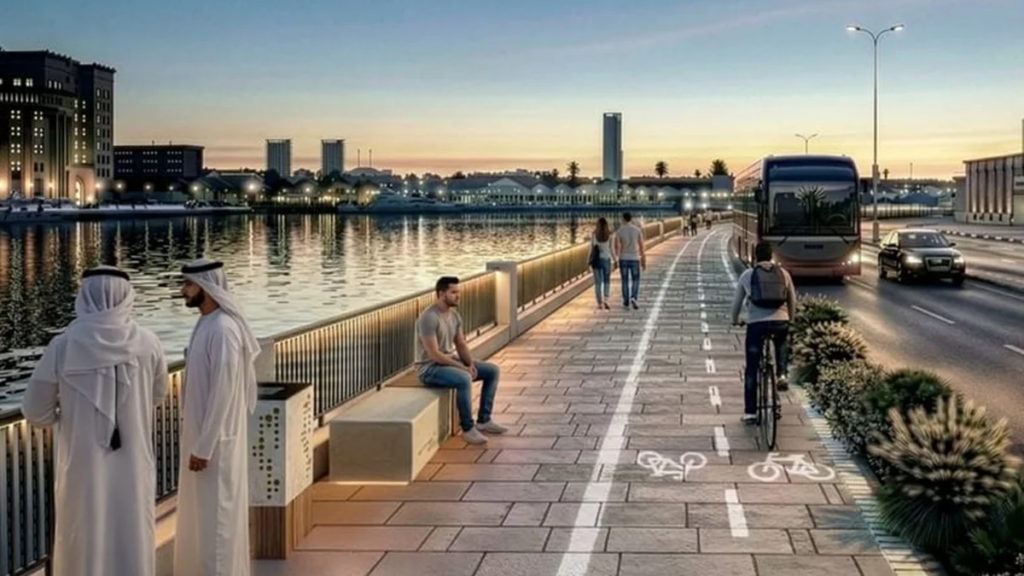
One of the most interesting parts of this project is how it links key heritage sites. Instead of hopping between locations by car, visitors will be able to walk through them in one continuous route.
The walkway will connect:
- Al Ahmadiya School
- Sheikh Saeed Al Maktoum House
- Al Ras Public Library
- Al Fahidi Fort
- Al Shindagha Historic District
It turns a simple visit into a proper experience. You’re not just reaching a destination — you’re moving through layers of Dubai’s history.
More than just walkways — art and culture come into play
This isn’t just about infrastructure. There’s a strong cultural layer built into the project.
Around 10 artistic spaces will be upgraded as part of the plan. These won’t feel like separate galleries. Instead, they’ll be integrated into the walkway itself.
Expect murals, installations, and subtle lighting that highlight the character of the area after sunset.
Local and Emirati artists will be involved, which adds a more authentic touch. It’s not just decorative — it tells stories.
Seasonal events and creative programmes are also expected to activate these spaces, giving people more reasons to return.
Designed for comfort in Dubai’s climate
Let’s be honest — walking in Dubai isn’t always easy, especially in summer. This project takes that into account in a practical way.
Shaded pathways, trees, and even misting systems are being introduced to reduce heat. These aren’t small upgrades. They make a real difference when you’re outdoors.
There will also be:
- Barrier-free access for all users
- Clear signage and wayfinding systems
- Interactive elements like digital screens
- Fitness-friendly spots along the route
It’s designed to feel usable, not just visually appealing.
Safety is another key focus. Across the wider master plan, 110 pedestrian bridges and crossings will be added to connect different parts of the city more smoothly.
Better connections with public transport
One of the practical benefits of this project is how well it connects with existing transport.
The Al Ras Walkway will link to 11 stations, including Metro, bus, and marine transport options. That means shorter walking distances between stops and final destinations.
It may seem like a small detail, but it makes public transport far more convenient for daily use.
What happens next?
The first phase of the Dubai Walk Master Plan will run between 2025 and 2027. After that, the project will expand in stages across the city, continuing all the way to 2040.
Over time, more neighbourhoods will see similar upgrades — making walkability a standard feature rather than an exception.
The Al Ras Walkway project feels like a natural step for Dubai. It respects the past while quietly improving how people experience the city today.
It’s not just about walking more. It’s about slowing down, noticing details, and actually enjoying the journey.
And in a fast-paced city like Dubai, that shift matters.
Follow Social Kandura for more updates on local news and things to do in Dubai and across the UAE.
Read More: Saudi Arabia Announces $266M Makkah Healthcare Projects


