

Dubai’s daily commute is about to get a little easier.
The Dubai Roads and Transport Authority (RTA) has officially begun rolling out 45 traffic upgrades across eight major locations in the city — a large-scale initiative designed to reduce congestion and cut journey times by up to 30 per cent.
This isn’t a cosmetic upgrade or a one-off project. It’s part of RTA’s wider 2026 mobility and road efficiency plan, which focuses on fixing everyday traffic pain points — the bottlenecks locals know too well — using fast, practical solutions rather than long, disruptive mega-projects.
For anyone who drives regularly in Dubai, these are the kind of changes that actually matter: smoother merges, fewer choke points, better junction flow, and roads that finally match the volume of traffic they carry.
The areas seeing upgrades
The eight locations selected by RTA are not random. They’re places that see daily congestion because of heavy residential movement, school traffic, commercial transport, or major commuter flows between communities.
The upgrades are taking place across:
- Emirates Road, especially the stretch linking Sharjah traffic towards Wadi Al Amardi Street
- Umm Amara Street, connecting Sheikh Zayed Road and Al Wasl Road
- Jebel Ali–Lehbab Road, a critical route for logistics and long-distance traffic
- The corridor between Sama Al Jaddaf and Al Jaddaf Waterfront, near the metro station
- Al Na’ayat Street in Al Barsha 1
- The area surrounding Al Maktoum School in Satwa
- The junction of Al Ittihad Street and Al Quds Street
- Sheikh Rashid Street, stretching from the Grand Hyatt area towards Bur Dubai
These are roads many Dubai residents use daily — for school runs, office commutes, business deliveries, and inter-emirate travel. Fixing pressure points here doesn’t just improve traffic locally; it improves flow across entire districts.
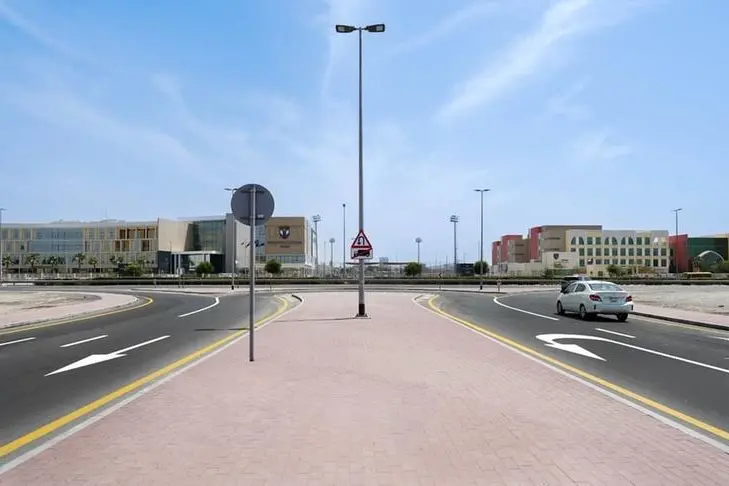
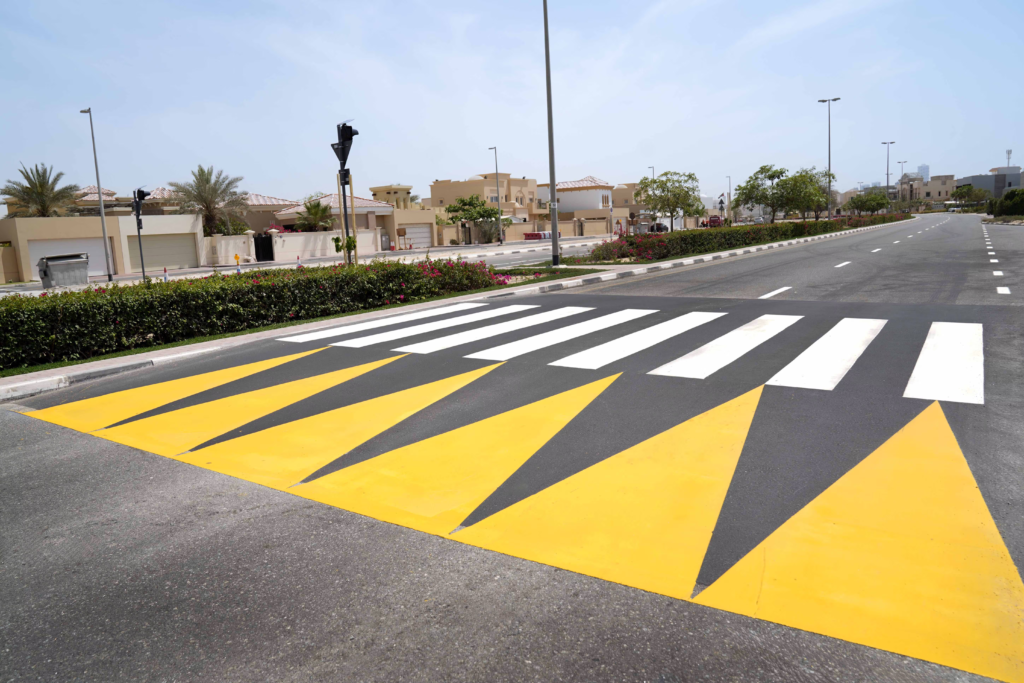
What’s actually changing on the roads?
Rather than large-scale reconstruction, RTA is focusing on rapid-impact engineering solutions — changes that can be implemented faster but still deliver measurable results.
The upgrades include:
- Expanding single-lane roads into dual lanes where space allows
- Converting roundabouts into signalised intersections for better traffic control
- Creating new road links between busy corridors and residential zones
- Improving parking access and road safety near schools and dense neighbourhoods
- Redesigning at-grade junctions that currently cause bottlenecks
These are small structural changes, but their impact adds up. More lanes mean smoother merging. Better signals mean fewer chaotic intersections. New links reduce unnecessary detours. And safer school zones ease both traffic and risk.
According to RTA, these upgrades are expected to reduce congestion and journey times by 15% to 30%, depending on location and traffic volume.
In real terms, that means fewer 40-minute crawls turning into one-hour delays. Shorter queues at junctions. And less daily driving fatigue for commuters.
How does change everyday life in Dubai?
Dubai’s growth hasn’t slowed. New communities keep expanding. More cars are on the road. More delivery vehicles, taxis, ride-hailing services, and logistics fleets operate daily. Without constant upgrades, even well-planned road networks get overwhelmed.
What makes this plan important is its local focus.
This isn’t just about highways. It’s about:
- Parents navigating school traffic
- Office commuters are stuck at the same junction every morning
- Residents in dense areas like Al Barsha, Satwa, and Al Jaddaf
- Delivery drivers working peak hours
- Inter-emirate travellers using Emirates Road
RTA’s approach reflects a shift toward data-driven urban mobility — using traffic studies, real-time monitoring, and on-ground analysis to decide where changes are needed most, instead of reactive construction after congestion becomes unmanageable.
Short-term disruption, long-term relief
As with any road project, some areas will see temporary lane diversions, roadworks, and construction activity. But the upgrades are being rolled out in phases to minimise disruption.
For drivers, this means short-term inconvenience for long-term ease.
Once completed, these changes are designed to quietly blend into daily life — the kind of infrastructure upgrades you don’t notice directly, but feel every day through smoother drives, shorter queues, and more predictable travel times.
The bigger picture
This initiative also builds on previous rapid-solution projects rolled out across Dubai over the past year, where similar traffic interventions delivered measurable improvements in commute times and traffic flow.
Instead of waiting for congestion to become unmanageable, RTA is shifting towards continuous optimisation — treating traffic flow as a living system that needs constant fine-tuning.
For a city like Dubai, where mobility is central to productivity, business, and lifestyle, this kind of planning is not optional. It’s essential.
Dubai’s RTA traffic upgrades mark a practical, people-focused step toward smoother urban movement. By targeting real congestion points across eight busy locations and delivering fast, effective road solutions, the city is addressing daily commuter stress at ground level — not just on policy documents.
It’s not about big announcements. It’s about better mornings, shorter drives, and roads that work the way they should.
Small changes. Real impact. Everyday relief.
Follow Social Kandura for more updates on local news and things to do in Dubai and across the UAE.
Read More
- 2026 mobility and road efficiency plan
- 45 traffic upgrades across eight major locations
- 45 traffic upgrades across the city
- Dubai RTA
- Dubai RTA rolls out 45
- Dubai RTA rolls out 45 traffic
- Dubai RTA Traffic Control
- Local News Social Kandura
- rapid-solution projects rolled out across Dubai
- RTA
- RTA traffic upgrades
- Social Kandura Media
- Social Kandura Media Local News
- traffic upgrades Dubai


