

Ask anyone in Dubai to describe the city, and chances are the Burj Khalifa comes up within seconds.
It’s more than a tall building. It’s a marker of time. A reminder of where Dubai was, where it aimed to go, and how far it has travelled since.
Understanding about Burj Khalifa means looking beyond the height. It’s about ambition, timing, engineering, and a city that decided the sky was not the limit.
The Beginning: How the Burj Khalifa Idea Was Born
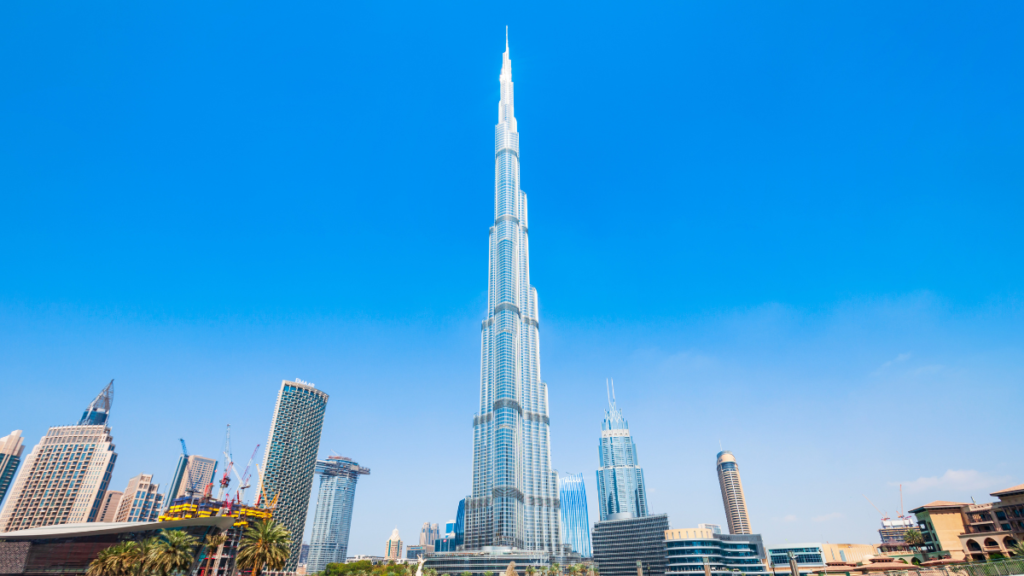
In the early 2000s, Dubai was changing fast.
The city wanted a centrepiece for a new downtown district — something that would anchor the area and announce Dubai’s arrival on the global stage. The idea wasn’t just to build tall. It was to build the tallest.
Plans were set in motion as part of the larger Downtown Dubai development. What began as an ambitious concept soon turned into one of the most complex construction projects the world had seen.
At the time, many doubted it could be done. Dubai moved ahead anyway.
History of Burj Khalifa: From Vision to Reality
Construction of the Burj Khalifa began in 2004.
Thousands of workers, engineers, and designers collaborated across continents. Materials were sourced globally. Techniques were tested and refined in real time. Every metre added came with new challenges.
In 2010, the tower officially opened, instantly breaking multiple world records. At 828 metres, it became the tallest man-made structure on Earth — a title it still holds today.
That moment reshaped how the world looked at Dubai.
How Burj Khalifa Was Built: Engineering in the Extreme?
Building something this tall in desert conditions was never going to be simple.
The foundation alone required deep piles drilled into the ground to support the weight above. The tower’s stepped design wasn’t just aesthetic — it helped reduce wind forces at higher levels.
Special concrete mixes were developed to withstand intense heat, sometimes poured at night to maintain quality. The structure tapers as it rises, allowing the building to stay stable even during strong winds.
Every detail served a purpose. Nothing was accidental.
Design Inspiration: Tradition Meets Modernity
The Burj Khalifa’s design takes cues from Islamic architecture.
Its Y-shaped floor plan maximises views while giving the building its elegant, rising form. The influence of regional geometry is subtle but intentional, grounding the tower in local culture despite its futuristic appearance.
From a distance, it feels sleek and modern. Up close, it feels considered and refined.
Inside Burj Khalifa: A Vertical City
The Burj Khalifa isn’t just a tower you admire from below.
Inside are luxury residences, corporate offices, and the Armani Hotel Dubai. Everything is designed to feel calm and controlled, even at extreme heights.
The observation decks — Levels 124, 125, and 148 — are where most visitors head. The lift ride alone is an experience, climbing hundreds of metres in seconds before opening to views that stretch across the city, desert, and sea.
Burj Khalifa Today: The Present-Day Experience
Today, the Burj Khalifa sits at the heart of Downtown Dubai, surrounded by cafés, promenades, and the Dubai Fountain.
It’s part of everyday life. Residents jog past it. Visitors gather around it. Families picnic nearby during cooler months.
Ticket prices vary by level and time, with sunset slots being the most popular. Early mornings are quieter, while evenings bring energy and atmosphere.
It’s as much a lifestyle space as it is a landmark.
Burj Khalifa Fireworks and Drone Shows: Global Attention, Local Pride
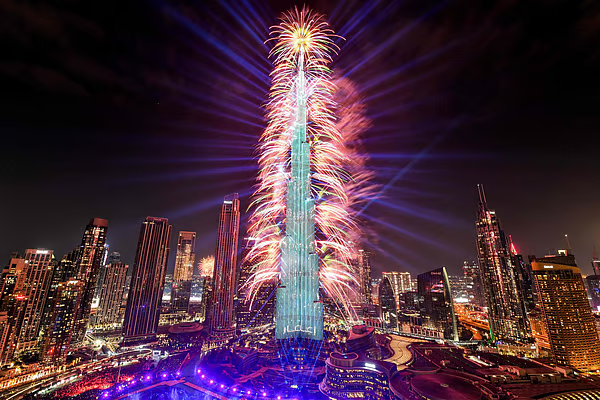
The Burj Khalifa truly shines during major celebrations.
New Year’s Eve fireworks turn the tower into the centre of global attention, with displays racing up its full height. National Day and special events now feature drone shows, adding precision and storytelling to the skyline.
For residents, it’s a familiar ritual. For the world, it’s a spectacle.
And Burj Khalifa Still Defines Dubai
Dubai continues to grow, with new landmarks rising every year. Yet the Burj Khalifa remains unmatched.
It represents confidence. Risk-taking. Vision. It’s proof that Dubai doesn’t just follow trends — it sets them.
Even after more than a decade, it still feels relevant.
About Burj Khalifa, Then and Now
From a bold idea in the desert to a global icon, the Burj Khalifa’s journey mirrors Dubai’s own story.
It’s not just about height. It’s about belief, execution, and a city that wasn’t afraid to aim higher than anyone else.
And that’s why the Burj Khalifa will always be more than a building.
Follow Social Kandura for more updates on local news and things to do in Dubai and across the UAE.°
Read More: RTA and Emaar Announce Major Burj Khalifa Dubai Mall metro expansion


