
Dubai doesn’t just observe Ramadan.
It reshapes itself around it.
From February 19 to March 19, the city will enter a different rhythm as Ramadan 2026 in Dubai transforms daily life, public spaces, and night-time culture through the Season of Wulfa — a month-long programme of lights, community gatherings, cultural events, and shared experiences.
This won’t feel like a single festival. It will feel like the whole city moving together.
After sunset, the streets glow. Cafés fill up. Families head out. Corniches become crowded again. Public squares turn social. The pace softens, but the city feels more alive.
For residents, this isn’t just an event calendar. It’s a seasonal shift.
For visitors, it’s a version of Dubai they don’t usually see.
When Dubai starts glowing after sunset?
One of the greatest changes Ramadan brings to Dubai is the nighttime energy.
Fireworks and drone shows will light up the skyline across multiple parts of the city, turning ordinary evenings into shared public moments. These won’t be limited to one location. The idea is spread, access, and community — so people don’t have to travel across the city just to feel part of it.
Waterfronts, promenades, open public spaces and neighbourhood areas will become gathering points. Families will walk. Kids will run around. People will stop to watch the sky.
It’s not about spectacle alone. It’s about atmosphere.
- That soft glow.
- That calm noise.
- That feeling that the city slows down but doesn’t switch off.
In Dubai, Ramadan nights have their own identity. And 2026 is shaping up to amplify that.
Read More: Expected Ramadan Fireworks Places in Dubai for 2026
Markets, culture and the return of slow evenings
Ramadan in Dubai isn’t rushed. It’s social.
Expect Ramadan markets, night bazaars, and cultural pop-ups across different districts — offering food stalls, local brands, crafts, and traditional experiences. These spaces won’t just be for shopping. They’re for walking, sitting, talking, and just being outside.
This is where the real city energy shows up.
You’ll see Emirati families, expat groups, tourists, and long-time residents — all sharing the same spaces. Arabic coffee stands next to dessert carts. Traditional outfits next to everyday workwear. Old traditions next to modern city life.
Cultural nights will bring poetry, heritage performances, storytelling, and live traditional music into public venues. Quiet, reflective experiences that feel grounded and real — not staged or commercial.
- These moments matter because they slow the city down.
- They create a pause.
- They bring people together without pressure.
Ramadan in Dubai has always been about community first. The events just give it structure.
Iftar tents that bring strangers together
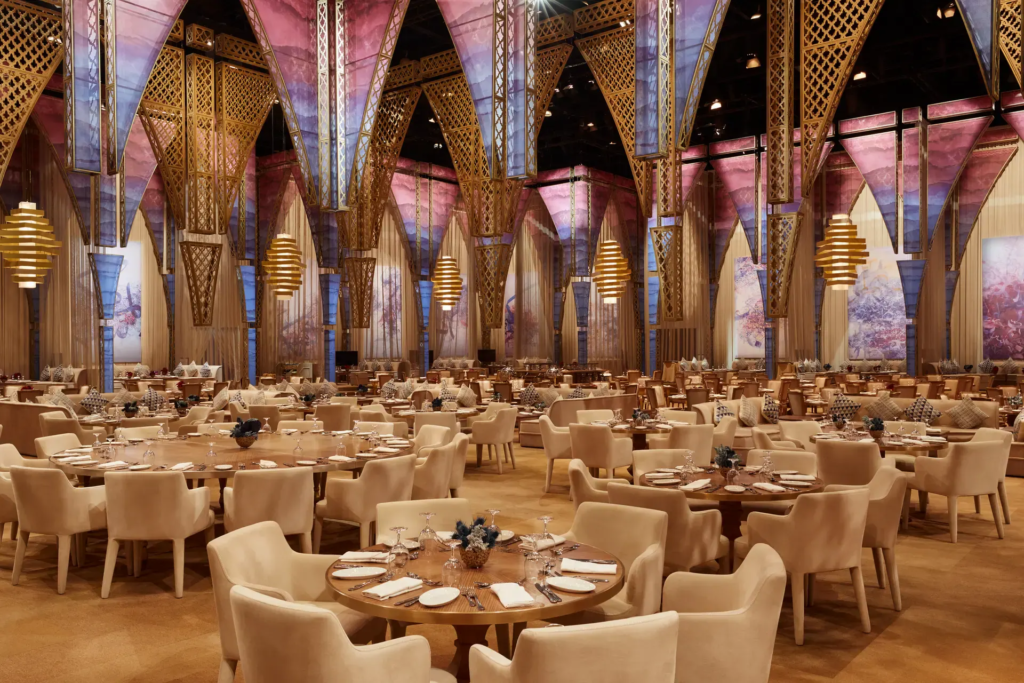
If there’s one symbol of Ramadan in Dubai, it’s the iftar tent.
In 2026, the city will see large-scale hotel iftar tents, neighbourhood iftar spaces, and community-run food setups across different areas. Some will be grand. Some will be simple. All of them will serve the same purpose — shared tables, shared time, shared space.
This is where Dubai feels most human.
- Strangers sit together.
- Phones go away.
- Conversations happen naturally.
- Time slows down.
For many residents, these iftars are traditions. Same friends. Same families. Same dates every year. For others, it’s discovery — new spaces, new people, new routines.
And it doesn’t matter who you are. Everyone eats together.
That’s Ramadan in Dubai.
Also Read: Best Iftar Buffets in Dubai to Try This Ramadan 2026
Season of Wulfa: Not one venue, but the whole city
What makes the Season of Wulfa different is its scale and spread.
- This isn’t one festival zone.
- It isn’t one main venue.
- It isn’t one central attraction.
It’s Dubai itself.
Malls, public parks, waterfronts, heritage areas, residential districts, mosques, community spaces — all become part of the experience. That means people don’t have to “go to” Ramadan. They live inside it.
- Your neighbourhood feels different.
- Your street feels different.
- Your routine feels different.
That’s what makes it powerful. It’s not distant. It’s local.
It reflects how Dubai has grown — not as one centre, but as many connected communities.
How daily life shifts across the city?
Ramadan doesn’t stop Dubai. It reshapes it.
- Work schedules adjust.
- Traffic flows change.
- Restaurants shift timings.
- Gyms move hours.
- Malls stay open late.
- Beaches feel calm in the day, busy at night.
- Mornings get quieter.
- Nights get longer.
- People walk more.
- Sit more.
- Rush less.
- Even the energy feels different. Softer. Kinder. Slower.
For long-time residents, this rhythm is familiar. For new residents, it becomes one of those “Dubai experiences” that stays with them.
- Ramadan 2026 won’t just be about events.
It will be about how the city feels for a month. - Ramadan 2026 in Dubai won’t be loud in the usual way.
It will be calm, warm, and deeply social. - A city that glows at night.
A city that gathers after sunset.
A city that slows down without losing its energy. - From fireworks and drone shows to quiet prayers and shared meals.
From night markets to community iftars.
From cultural nights to simple evening walks. - Dubai won’t just celebrate Ramadan.
It will live it.
Follow Social Kandura for more updates on local news, things to do, Travel, Bollywood, food and lifestyle across Dubai and the UAE.
Read More
- Dubai experiences
- Fireworks at Ramadan
- Food In Dubai
- iftar food
- iftar tent
- Ramadan 2026
- Ramadan 2026 in Dubai
- Ramadan Fast
- Ramadan Food in Dubai
- ramadan in dubai
- ramadan in UAE
- Ramadan Markets
- Ramadan Nights
- Ramadan Shoppings
- Season of Wulfa
- Social Kandura Dubai's News Portal
- Social Kandura Latest News
- Social Kandura Media News
- Social Kandura News Portal


