

If you’ve ever driven down the Palm Jumeirah crescent early in the morning for a quiet walk or pulled up just before sunset to catch the views, you’ll want to take note. Palm Jumeirah paid parking has officially arrived on the crescent, and it changes how motorists use one of Dubai’s most loved waterfront stretches.
The update applies specifically to on-street parking along the Palm Jumeirah crescent, the outer ring that wraps around the island. The area is known for its uninterrupted sea views, the long boardwalk, and easy access to resorts, cafés, and beachside spots. Until now, parking here was largely free. That’s no longer the case.
Paid parking is now live on the crescent
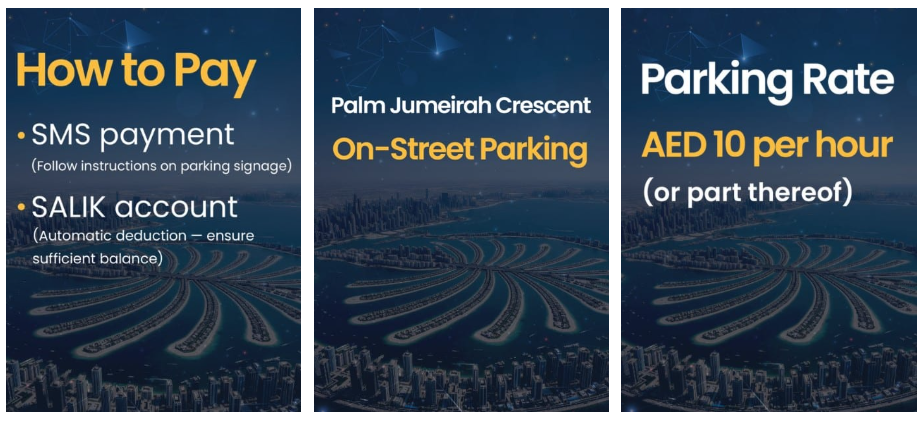
Parking operator Parkonic has confirmed that paid parking is now in effect along the Palm Jumeirah crescent. Motorists parking on the street will be charged Dh10 per hour, or part thereof.
This applies 24 hours a day, seven days a week. There are no free hours in the early morning or late evening. Whether you’re stopping for a sunrise jog or a late-night drive, the same rate applies.
For regular Palm visitors, this is a noticeable shift. The crescent has long been a go-to spot for people who prefer a quieter walk compared to the busier trunk. It’s also popular with cyclists, families, and anyone looking to escape the city noise without leaving Dubai.
How drivers can pay — no tickets, no machines
The new system is fully ticketless and cashless, in line with Dubai’s wider move towards digital transport services.
Drivers have two main ways to pay:
- SMS parking by following the instructions displayed on roadside signs
- Salik account payment, where the fee is deducted automatically if your vehicle is linked
There are no physical ticket machines and nothing to display on the dashboard. Parking enforcement is done digitally using vehicle plate numbers, so it’s important to make sure payment is completed correctly and for the right duration.
For many Dubai motorists, especially those already using Salik daily, the system will feel familiar and relatively hassle-free.
Why are parking rules changing on the Palm?
Palm Jumeirah has changed a lot over the years. What was once a quieter residential island is now one of Dubai’s busiest lifestyle destinations.
On any given day, the crescent sees:
- Morning walkers and runners using the boardwalk
- Visitors heading to beach clubs and resorts
- Tourists stopping for photos
- Delivery vehicles and service traffic
Free roadside parking often meant cars staying parked for hours, especially on weekends. This made it harder for others to find space and added to congestion along a road that was never designed for heavy parking turnover.
Introducing paid parking is meant to improve flow, reduce long-stay parking, and manage demand more effectively. Similar systems have already been rolled out in other high-density areas across Dubai, particularly where shared parking has become an issue.
How the new parking system works?
For Palm residents, especially those living on the trunk or crescent, this change mainly affects guests and casual visitors. Most residential buildings have designated parking, but roadside parking has often been used by visitors meeting friends or heading out for a walk.
For visitors, the key change is simple: parking now needs to be planned, even for short stops. A quick 15-minute pause still counts as an hour, so it’s worth keeping an eye on timing.
Many locals say this may also encourage people to:
- Walk or cycle more often along the boardwalk
- Use taxis or ride-hailing apps for short visits
- Combine activities into one trip rather than multiple short stops
In a city where convenience often comes first, the goal appears to be balance rather than restriction.
A wider shift in Dubai’s parking landscape
The Palm Jumeirah update is not happening in isolation. Across Dubai, parking rules are becoming more structured, especially in mixed-use neighbourhoods where residential, retail, and leisure needs overlap.
In areas like Discovery Gardens and business districts closer to the city centre, paid and permit-based parking has already been introduced to reduce misuse and improve availability for residents.
The Palm, with its unique layout and high visitor numbers, was always likely to be next.
Things to keep in mind before you go
If you’re planning a visit to the Palm Jumeirah crescent, a few quick tips can help avoid fines or frustration:
- Check parking signage carefully before leaving your car
- Set a reminder if you’re parking for a limited time
- Ensure your Salik account has a sufficient balance
- Avoid assuming short stops are free — they aren’t
A little planning goes a long way, especially on weekends and public holidays.
Paid parking on the Palm Jumeirah crescent marks another step in Dubai’s evolving approach to urban mobility. The views are still there. The boardwalk is still open. But now, stopping your car comes with a cost.
For many, it’s an adjustment. For others, it’s a sign that one of Dubai’s most iconic neighbourhoods is continuing to grow — and manage that growth more carefully.
Follow Social Kandura for more updates on local news, things to do, travel, Bollywood, food, and lifestyle across Dubai and the UAE.
Read More: Paid Parking Starts in Discovery Gardens: Monthly Permits Set at Dh945


