

Anyone who drives through Sheikh Zayed Road at peak hours knows the feeling.
A short distance. A long wait.
Dubai has expanded roads, added bridges, and upgraded intersections for years. Still, traffic remains part of daily life, especially in busy zones like Downtown, DIFC, Al Quoz, and around major malls.
Now, Dubai is trying something different.
At the World Government Summit 2026, the Roads and Transport Authority (RTA) announced two new transport projects — Dubai Loop and the Glydways transport system. Together, they aim to reduce congestion, shorten travel time, and make moving around the city easier without adding more cars to the road.
Strategic Partnership between RTA and The Boring Company to Study the Implementation of Dubai Loop.@elonmusk |@boringcompany | @rta_dubai pic.twitter.com/HNHxecjlfG
— Dubai Media Office (@DXBMediaOffice) February 13, 2025
Dubai Loop: Faster travel, underground
Dubai Loop is the more ambitious of the two projects.
The idea is simple.
If roads are crowded, go underneath them.
What is Dubai Loop?
Dubai Loop will be a network of underground, one-directional tunnels designed for vehicles. The tunnels will be about 3.6 metres wide and can serve up to 100 cars at a time.
The concept is similar to underground tunnel systems already operating in other global cities, but adapted for Dubai’s urban layout and traffic patterns.
Where will it start?
The first phase will connect Dubai Mall and DIFC, two of the city’s busiest areas for offices, retail, and tourism. Four underground stations are planned along this route.
For professionals working in DIFC or residents travelling into Downtown, this corridor is one of the most time-consuming during rush hours.
Dubai Loop’s long-term vision
According to RTA estimates, Dubai Loop could cut travel time from 20 minutes to just three minutes on this route.
That is not just convenience.
It means fewer cars on surface roads, smoother traffic flow, and less stress for daily commuters.
How big will Dubai Loop become?
Dubai Loop is not limited to one route.
Once expanded, the network is expected to:
- Stretch up to 22.2 kilometres
- Include 19 underground stations
- Connect Dubai World Trade Centre, DIFC, and Business Bay
- Span a total of 24 kilometres when fully completed
- Cost an estimated Dh2.5 billion
This could create a fast-moving underground alternative for some of the city’s most congested districts, especially areas where widening roads is no longer practical.
Glydways: Solving the last-mile problem
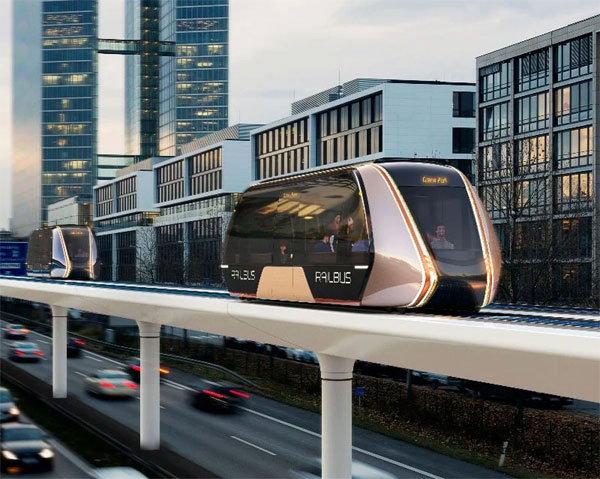
While Dubai Loop focuses on longer, high-traffic corridors, Glydways tackles a different issue — last-mile connectivity.
This is the short distance between a metro station and your final destination. Often too far to walk comfortably. Too short to justify a car.
What is the Glydways system?
Glydways will use self-driving electric pods that run on dedicated lanes roughly the size of a bike lane. These pods can travel at speeds of up to 50kmph and operate independently of existing traffic.
Each pod carries four to six passengers. Multiple pods can move together in a line, similar to a train, increasing capacity during busy hours.
Where will Glydways operate in Dubai?
The RTA has identified four locations for the initial rollout.
Planned routes include:
- Bluewaters Island
A 2.8km pilot route connecting National Paints Metro Station to Bluewaters Island. This will be the first route to launch and is expected to begin operations this year. - Umm Suqeim
A 1.9km route from Mall of the Emirates Metro Station to Madinat Jumeirah — an area popular with tourists and residents alike. - Al Quoz
A 2.6km stretch linking OnPassive Metro Station to Alserkal Avenue and Times Square Centre, serving Dubai’s creative and commercial zones. - Dubai Festival City
A 7km route covering the area, with potential future connectivity to the Dubai Metro Blue Line.
Glydways could make daily travel easier
One of the biggest advantages of Glydways is flexibility.
The system can be built along existing roads, above ground, or underground, without major construction or overhead wiring. Because pods run in dedicated lanes, they are not affected by traffic congestion.
At full capacity, Glydways can transport over 10,000 passengers per hour in each direction.
For residents, that could mean:
- Faster access from metro stations
- Fewer short car trips
- Less reliance on taxis for short distances
For the city, it means less congestion and lower emissions.
How does this fit into Dubai’s wider transport vision?
Dubai Loop and Glydways are part of a broader push to rethink urban mobility.
In 2025 alone, the RTA completed 67 rapid traffic improvement projects across the city. These focused on easing bottlenecks and improving traffic flow in key areas.
The new projects go a step further. Instead of just improving roads, they change how people move.
Dubai’s approach is clear:
Move faster. Use space smarter. Reduce pressure on surface roads.
What should we expect next?
Both projects are still in early stages. Construction timelines, ticket pricing, and operational details will be announced later.
But the direction is set.
Dubai is investing in future-ready transport that saves time, improves connectivity, and supports the city’s growing population.
Dubai Loop and Glydways offer two different solutions to the same problem.
One takes traffic underground.
The other reimagines short trips with autonomous pods.
Together, they show how Dubai plans to stay mobile — even as the city continues to grow.
Follow Social Kandura for more updates on local news, things to do, travel, Bollywood, food and lifestyle across Dubai and the UAE.
Read More


