

Early mornings in Dubai have started to look different. Along stretches in Al Qudra, Jumeirah, and now even deeper into residential areas, it’s common to spot cyclists gliding past as the city slowly wakes up.
That shift is no coincidence.
Dubai has added 162 kilometres of cycling tracks, pushing its long-term vision of building a 1,000km cycling network by 2030. The expansion, led by the Roads and Transport Authority (RTA), is already changing how people move through the city—especially for shorter, everyday journeys.
From weekend hobby to everyday commute
Not too long ago, cycling in Dubai felt like a weekend activity—something reserved for dedicated tracks like Al Qudra or quiet early hours.
Now, the experience is shifting.
The new routes connect areas like Al Khawaneej to Al Mamzar Beach, Al Warqa’a to Saih Al Salam, and even stretch from Dubai International Financial Centre to Jumeirah. That kind of connectivity makes cycling feel less like a planned outing and more like a practical choice.
In neighbourhoods such as Al Barsha 2 and Al Khawaneej 2, fresh tracks run through residential streets. It’s the kind of change residents notice instantly—morning rides, quick grocery runs, or even short commutes suddenly feel more accessible.
A global nod puts Dubai on the cycling map

Dubai’s progress hasn’t gone unnoticed.
The city has entered the top 100 cycling-friendly cities globally in the Copenhagenize Index 2025—becoming the first in the region to do so. The Copenhagenize Index looks at how cities design their streets, how often people actually cycle, and how well policies support that lifestyle.
For a city long known for its highways and fast-moving traffic, this marks a noticeable shift. It signals that Dubai is slowly rebalancing—making room for more human-scale movement.
Bridging the gaps—literally
One of the biggest challenges for cyclists in Dubai has always been crossing major roads. Wide highways can easily break the flow of an otherwise smooth ride.
That’s now being addressed.
Four new cycling and pedestrian bridges are on the way, connecting key routes across:
- Sheikh Mohammed bin Zayed Road
- Dubai-Al Ain Road
- Sheikh Zayed Road
- Al Khail Road
One of the upcoming links near Mall of the Emirates is expected to make a noticeable difference for riders moving between Dubai Hills and surrounding areas.
Once completed in 2026, these bridges won’t just improve safety—they’ll make longer rides feel continuous, without interruptions.
The numbers tell a bigger story
Behind the scenes, cycling in Dubai is growing faster than many expected.
- Track network expanded from 560km in 2024 to 636km in 2025
- Cycling trips jumped to 57.3 million in a year
- Satisfaction levels reached 85%
- Over 22% of residents now have access to cycling infrastructure
These aren’t just statistics—they reflect a change in daily habits. More residents are choosing to cycle, not just for fitness, but for convenience.
Making the “last mile” easier
Dubai’s approach isn’t only about long scenic tracks. It’s also about those short distances that often feel the most inconvenient.
Around areas like Al Souk Al Kabeer, Hor Al Anz, and Abu Hail, improvements have been introduced to help people move between public transport and their final destinations.
Near stations like BurJuman, Sharaf DG, and even close to the Burj Khalifa, you’ll now find better walkways, dedicated lanes for bikes and e-scooters, and smoother connections overall.
It’s a small detail—but one that makes a big difference in everyday life.
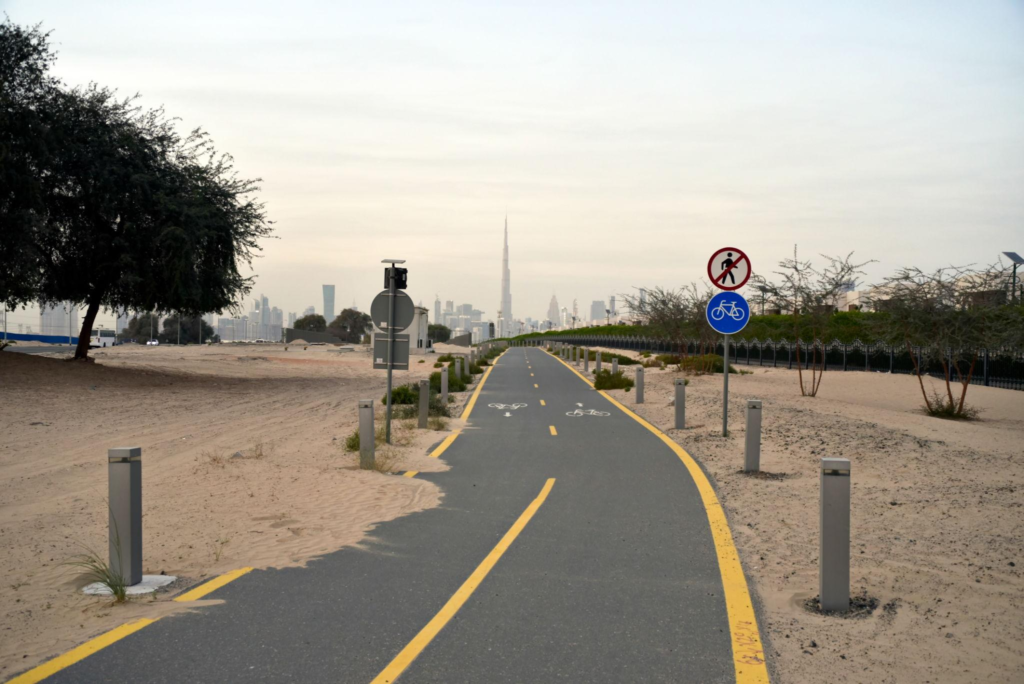
A quieter, more active side of Dubai
There’s something subtle happening across the city.
More people are stepping out earlier. More bikes are visible in residential streets. And in places like Jumeirah or Al Khawaneej, cycling is starting to feel like part of the lifestyle rather than an exception.
Dubai’s investment in cycling isn’t just about infrastructure. It’s about creating a city that feels easier to move around in—whether someone is heading to work, catching a sunset ride, or simply avoiding traffic for a quick errand.
Dubai’s 162km cycling expansion reflects a city that’s gradually changing pace. It’s still fast, still ambitious—but now, it’s also becoming more accessible at ground level.
For residents, that means more options. For the city, it’s another step toward a more balanced, liveable future.
Follow Social Kandura for more updates on local news and things to do in Dubai and across the UAE.
Read More


